
Artificial intelligence could change how Nashville students learn, but Ben Schumacher wants his proposed public charter school to start with something technology cannot replace: human connection.
Schumacher is developing Horizon Academies, a tuition-free, in-person public charter school planned to open in Nashville in fall 2028 with sixth grade and eventually serve grades 6-12. He describes it as an “AI-native” school, meaning artificial intelligence would be considered in everything from classroom instruction to family communications. But the idea is still in development, with a letter of intent expected in December and a full charter application in February 2027. Schumacher wants to use that time to hear from students and families before deciding exactly what the school will look like.
The Teachers Behind the Vision
Schumacher's grandfather was an orphaned son of immigrants whose high school teachers helped him find direction, eventually earning a doctorate in mathematics and helping establish Wright State University's math department. Schumacher's mother was a music educator, cementing education's influence on Schumacher from childhood. As an adult, he began his career at Deloitte Consulting, attended Harvard Business School, and joined Teach For America's national staff in 2011.
He thought he would work at TFA for a short time before returning to consulting, but instead stayed in education and, in 2014, began teaching fifth and sixth grade at Nashville's Valor Collegiate Academies. He later led Teach For America as the Executive Director of the Nashville-Chattanooga region, and served as an educational consultant, helping schools support students in various ways, including through responsible AI use.
Schumacher now has two sons in elementary school. He said that as a parent, he now sees the question from a new perspective. He described a time when he helped his children set up a lemonade stand, saying it unexpectedly brought together math, writing, art, and entrepreneurship. He wants Horizon students to get that same type of integrated experience by learning core subjects while exploring interests that make learning feel relevant.
“I myself was sort of a jack of all trades growing up, from sports to music and the arts, and core academics were big for me too,” Schumacher said. “I envision a school that brings those together in coherent ways.”
That idea includes more than elementary-style projects; He also wants older students to work with employers and community mentors to apply their classroom skills to real problems, with the larger goal of creating a school where students enjoy learning without losing academic consistency.
An AI School Built Around People
Horizon's proposed model has three main pillars: human development, personalized academics, and connections to careers or college. AI would support all three, but Schumacher said AI would not replace teachers or give children unlimited access to chatbots. Students would study grade-level reading, writing, math, science, and other subjects with teachers leading discussions and using individual information to decide what help a student needs next.
“I don't want to see a school that gives unfettered use of screens or AI chatbots or anything,” Schumacher said. “This is the wave of the future. Our kids need to have exposure to it. So, what I want to see is a school that takes into account the human piece first and foremost.”
One of the school's distinguishing features is its Human Foundations curriculum, which treats personal development as something students should be taught and then practice. It organizes eight skills into four categories: head, heart, hands, and horizon. Those include critical thinking and creativity, communication and connection, courage and capability, and conviction and self-awareness.
Schumacher is developing the framework with guidance from Belmont University's Character Consortium and consultant Caroline Martin, and he said teachers would model those skills, students would practice them in class and in the community, and the school would look for ways to measure their growth.
“We're going to treat this as seriously as we treat math,” Schumacher said. “We're not going to leave it up to chance. We're going to attempt to measure competency development on it and give feedback to students on how they're doing, and it's going to be just as rigorous as core academics.”
Horizon's longer-term plans also include courses in data science and AI, along with opportunities for dual enrollment, internships, apprenticeships, and projects with organizations. Schumacher said the point is to graduate students who can explain what they know, work well with others, and see a meaningful next step after high school.
Letting Students Help Design the School
Schumacher is already testing pieces of the model rather than waiting until opening day. Horizon's NextGen Fellowship brings together 11 young people ages 14 to 22 from district, charter, and private schools and universities for four design sessions running from October through January. Each fellow receives a $1,000 stipend. At their first gathering, participants discussed what they hoped and feared school could become in the age of AI. Schumacher said their feedback made clear that young people are curious about technology, but they also want relationships with teachers and classmates to come first.
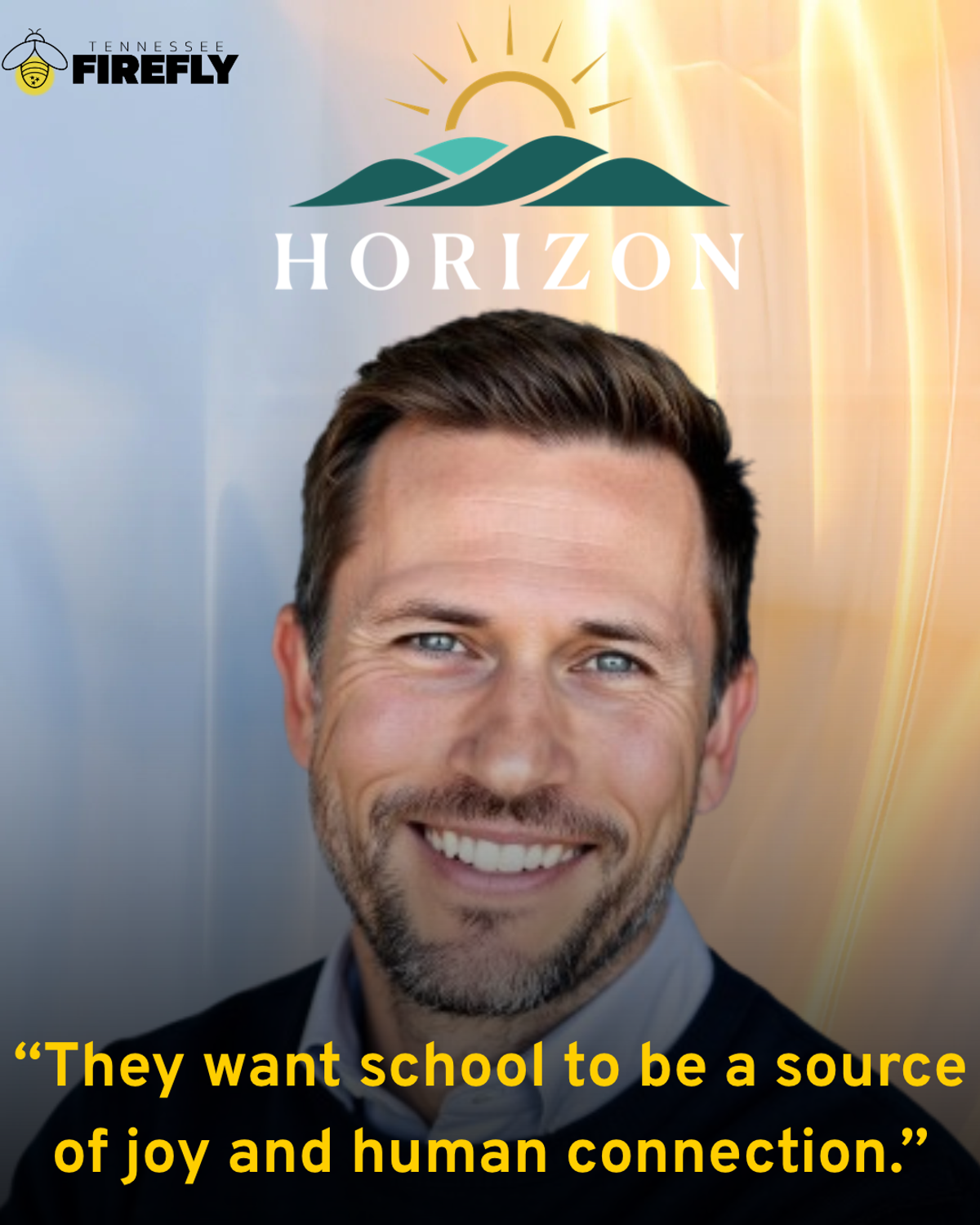
“They want school to be a source of joy and human connection,” he said.
The school will still need state approval and a suitable building. Schumacher has not decided whether to seek authorization through Metro Nashville Public Schools or the Tennessee Public Charter School Commission. That choice became possible after the commission overturned two Nashville charter denials, opening a direct state application route for future operators. Finding a home will be another hurdle: building shortages have already delayed other approved charter schools, even as a new statewide facilities fund aims to help schools pay for space. Schumacher said he wants to approach MNPS in good faith and let community demand help guide the school's location and plans.
Families can get an early look at the concept during two free one-day camps for third and fourth graders on Belmont University's campus. The Future Leaders Lab on Nov. 3 will introduce civic leadership through student-created projects and a mock legislative process; the Upstanders Lab on Nov. 11 will focus on standing up for others in a community. Both run from 8:30 a.m. to 4 p.m., include lunch and a snack, and offer 20 spots each. Schumacher hopes to offer longer pilots in spring or summer 2027.
Schumacher said he envisions Horizon to be a success five years from now if the school demonstrates strong student academic growth, includes diverse enrollment, and if families can see progress in skills such as collaboration and connection. He also hopes lessons from Horizon could eventually help other Nashville schools, whether district-run or charter. For now, he knows the first task is turning the idea into a school that families trust.
“We’ve got to earn that first,” Schumacher said. “I'm focused on opening one good school first,” Schumacher said.