
Tennessee’s public charter schools are facing more than $72 million in funding needs, and some much-needed help may finally be on the way.
The Tennessee Charter School Center (TCSC) announced that it is introducing the Volunteer Facilities Fund during its Tennessee Charter School Convening on Sept. 24 in Nashville. The fund is designed as a financing resource to help state charters pay for building projects without pulling money from classrooms.
How it Works
The Volunteer Facilities Fund uses state, philanthropic, and private investments to support new facilities, expansions, and major repairs, while also containing lanes for newer and more established schools. The money is structured as a revolving fund, meaning that repayments can be used again for future projects, allowing for the fund to continue supporting schools over time.
The fund launched with a $5 million investment from the State of Tennessee, matched by $10 million in philanthropic contributions from across the state and additional investor capital.
Why the Fund is Needed
Unlike traditional public schools, Tennessee public charter schools do not receive local government funding for facility projects, which often forces them to cover those costs with money that would have supported instruction.
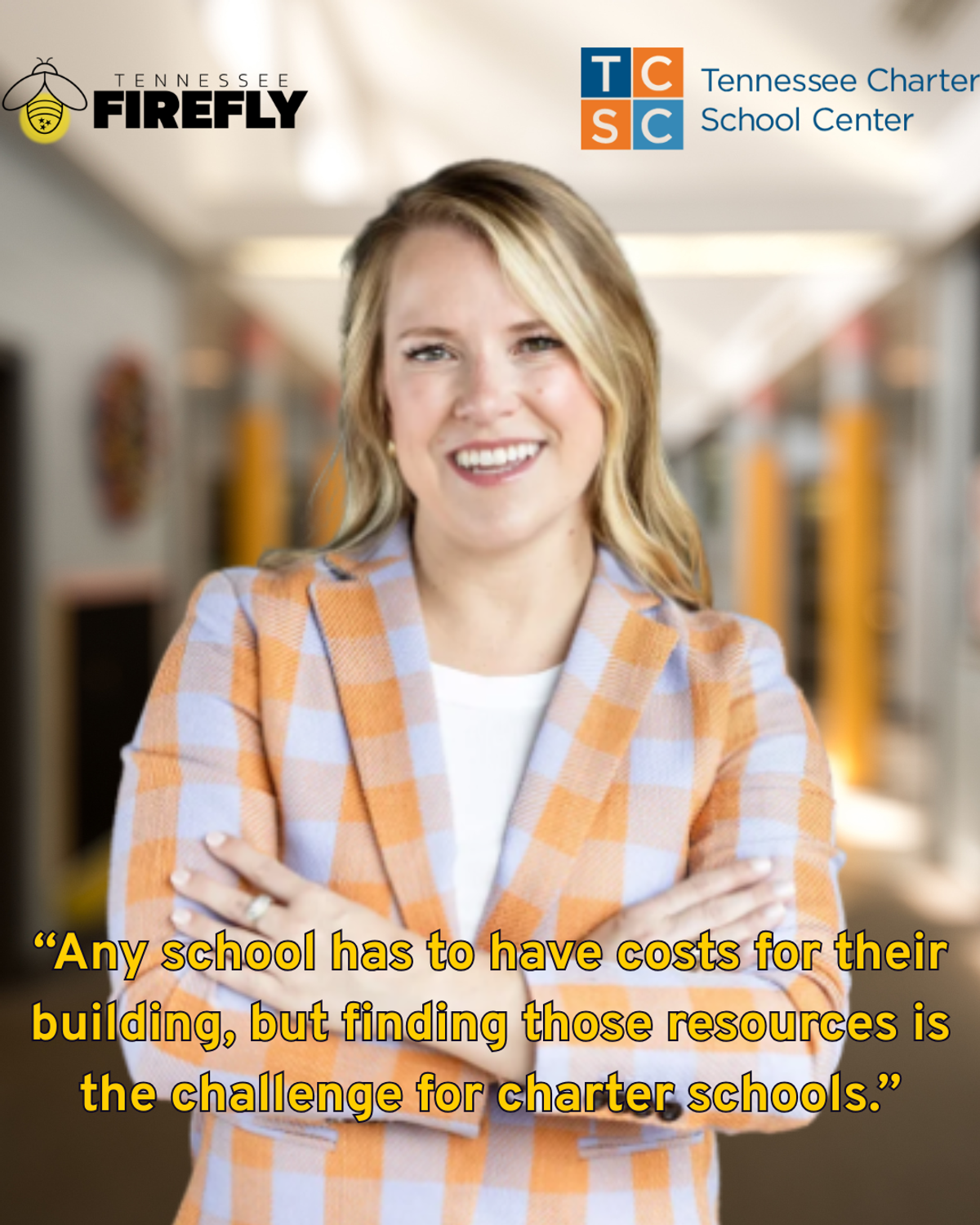
That gap can have consequences beyond the buildings themselves. TCSC Vice President of External Affairs Emily Lilley said charter schools receive per-pupil funding that leaders would ideally use for teachers, classroom resources, technology and other student needs and that when facility costs rise, schools can instead be forced to use some of those dollars to make sure students have a suitable place to learn.
“Any school has to have costs for their building, but finding those resources is the challenge for charter schools,” Lilley said. “Particularly for a new charter school that maybe is in their first planning year or first couple years, it's often particularly challenging for them to find those resources.”
The new fund is intended to give schools another option before those tradeoffs become necessary. Lilley said the separate financing tracks also recognize that newer schools and established schools face different challenges. Early-stage schools may have less enrollment history or a shorter track record when seeking financing, while more established schools may be preparing for a permanent facility as they approach full enrollment.
Tennessee Investment in Student Achievement (TISA) funding is Tennessee’s student-based funding formula for public schools and provides a base amount for every student, plus additional dollars based on individual student needs, academic outcomes, and other priorities. While public charter schools receive TISA funding, many charter leaders say the formula does not properly account for facilities.
Lilley said facilities are consistently one of the biggest financial challenges public charter school leaders raise with the organization, and that need is expected to grow.
“There’s a significant funding gap for public charter schools because they don’t have access to those local government funds that are typically spent on public school facilities,” Lilley said. “Closing that gap is really important, and this is one of the approaches that we are taking to hopefully make progress there.”
A TCSC survey found that Tennessee charters anticipate more than $72 million in capital projects over the next five years, ranging from new roofs and boilers to larger buildings for schools that continue to grow.
TCSC also sees the fund as a possible starting point for a broader support system around charter facilities. Lilley said schools need financing, but charter leaders also need information, expertise, and help understanding what type of facilities make sense for their schools.
“I think it would be great to see some of the newer schools who are able to access resources from that emerging fund ... moving into that pathway of being prepared for longer-term resources,” Lilley said. “We’d love to see this become something where we see schools getting what they need, and having the buildings and types of facilities that are working for their students.”