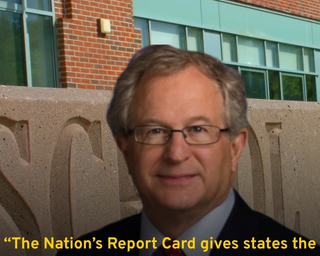

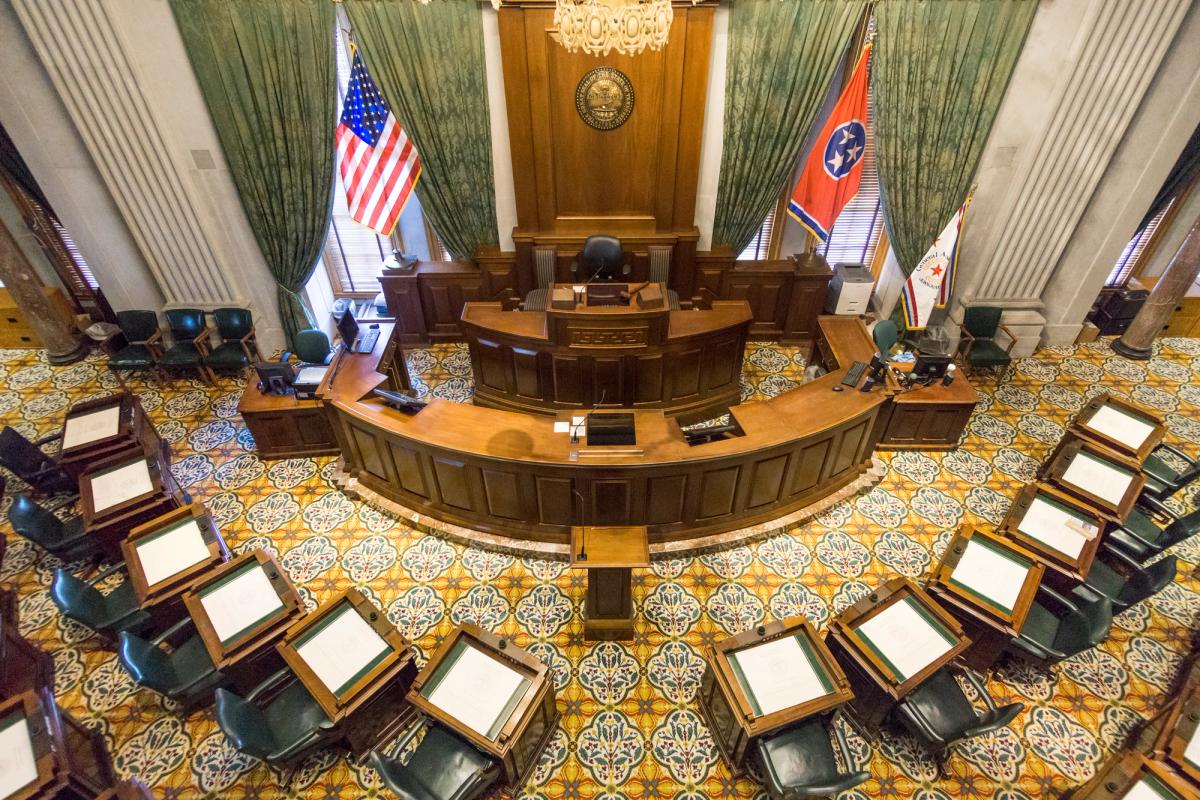
Republican members of the Tennessee Senate will choose a nominee to succeed outgoing Lieutenant Governor Randy McNally today, and the winner will be in line to pick who sits on the committee that hears the state’s education bills.
The speaker of the Senate is also Tennessee’s lieutenant governor, first in line to succeed the governor. The full Senate formally elects its speaker when the 115th General Assembly convenes on January 12, and Republicans currently hold 27 of its 33 seats.
Senate Majority Leader Jack Johnson, R-Franklin, and Senator Paul Bailey, R-Sparta, who chairs the Senate Commerce and Labor Committee, are seeking the job. State Affairs reported Monday that Senate Republicans will choose between them by secret ballot today.
Why the Speaker Matters for Students
Under the Senate’s current rules, the speaker appoints the members of every standing committee and names each committee’s chair and two vice chairs. That includes the nine-member Senate Education Committee, now chaired by Senator Dawn White, R-Murfreesboro.
In March, that committee voted 9-0 for the open enrollment bill and 8-0 for a bill requiring authorizers to automatically renew high-performing public charter schools. It also voted 9-0 for a bill requiring every public school to report the local tests it gives students.
When McNally announced his retirement in February, education advocacy organization Tennesseans for Student Success (TSS) credited him with putting students and families ahead of political interests and said his successor should do the same.
“With his retirement announcement, 2027 will bring our state a new governor and lieutenant governor, both of whom must hold that same priority, lest we retreat from the historic gains we have made in education and from the lasting impact for Tennessee students,” wrote TSS in a statement.
The Tennessee Firefly is a project of and supported by Tennesseans for Student Success.
How Johnson and Bailey Voted
Both candidates voted for all three bills on the Senate floor, where the charter renewal bill passed 26-4 and the local testing bill passed 27-3. Governor Bill Lee signed both into law.
Senate Bill 328 was legislation that would have made it easier for families to enroll their children in school districts outside of the one they’re zoned for, sometimes called open enrollment. It passed the Senate 30-0 on March 19.
Five days later, it failed on a 4-4 vote in the House K-12 Subcommittee, where opponents questioned how it would affect the finances of districts that accept students from outside their boundaries.
Both men also voted for the Education Freedom Scholarship Act, sometimes referred to as vouchers, which gives families the option of using taxpayer dollars to send their children to private school. Johnson carried both the 2025 law and this year’s expansion in the Senate, where they passed 20-13 and 18-14.
Johnson’s state Senate campaign website lists parental choice in education among his issues.
“No child should be trapped in a failing school because of their ZIP code,” wrote Johnson’s campaign.
In a statement after the 2025 scholarship vote, Bailey wrote that his top concern was protecting funding for rural school districts.
“I’ve always been a proponent of parental choice and educational freedom, while keeping in mind our constitutional obligation to fund public education,” wrote Bailey.
Bailey also sponsored a 2025 law that directs the Department of Education to set guidelines for how long a student must spend in a teacher’s classroom before that student’s record counts in the teacher’s evaluation. It passed the Senate without opposition.
What Happens Next
The House sponsor of open enrollment, Representative William Slater, R-Gallatin, told the Tennessee Firefly last spring that he supported bringing the bill back.
After the full Senate elects its speaker on January 12, the new speaker will appoint the Senate Education Committee for the 115th General Assembly.