
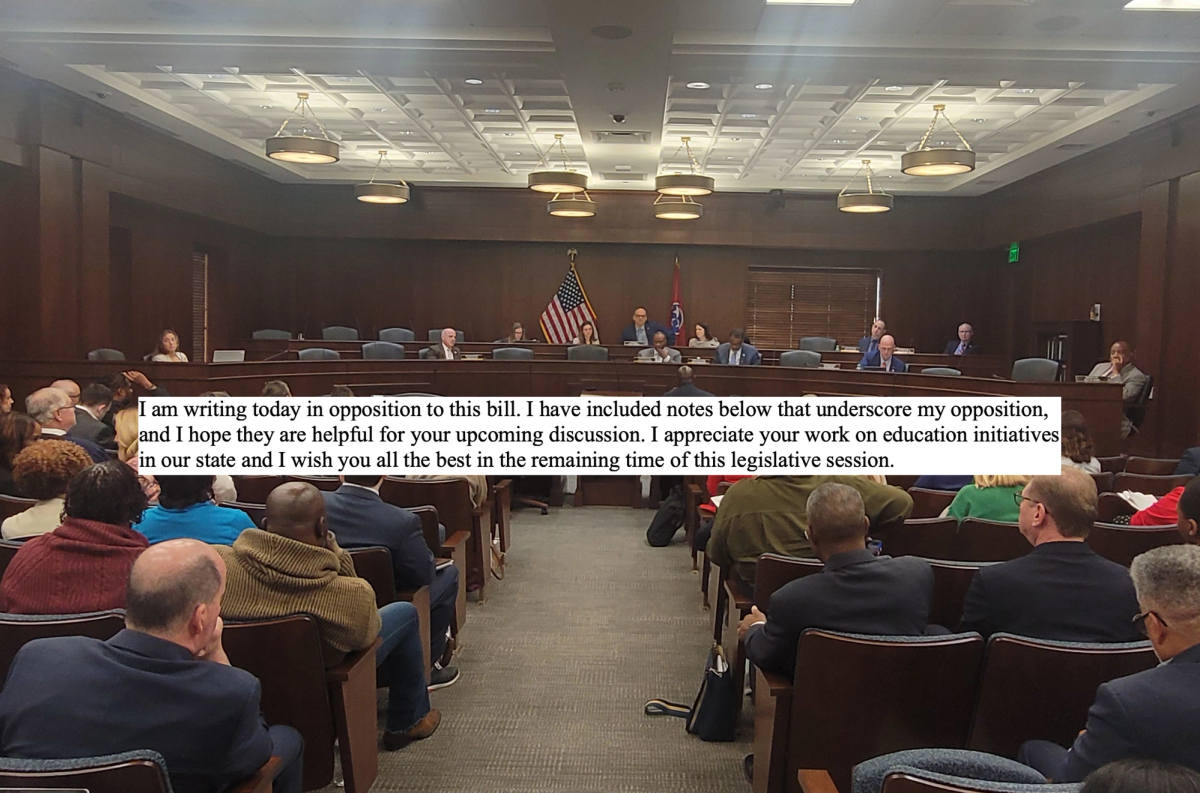
Last month, lawmakers on the House K-12 Subcommittee defeated legislation by just one vote that would’ve reduced the barriers parents face when enrolling their children in a school outside of their district, often called open enrollment.
A Tennessee Firefly investigation found that multiple subcommittee members heard from suburban school district leaders before the 4-4 vote.
Firefly staff requested email records from more than 10 school districts that are represented by members of the subcommittee. One email obtained from that request was sent by Collierville Schools Superintendent Dr. Russell Dyer to a subcommittee member who voted against the bill 11 days later.
The school district is located just east of Memphis, but it serves a notably different, smaller student population. Just 6 percent of Collierville’s 9,100 students are economically disadvantaged compared to 59 percent in Memphis-Shelby County Schools, and less than 30 percent are students of color compared to 94 percent in the Memphis school district.
Collierville students have an overall success rate on state tests of 69 percent or better, depending on grade level, compared to under 30 percent for all grades in Memphis-Shelby County Schools. That higher performance might be attractive to nearby parents in Memphis seeking school-choice options in another district, but Dr. Dyer was not supportive of making the process easier for them.
Why Collierville School Leaders Were Concerned
In his email, Dr. Dyer provided multiple reasons to maintain the existing barriers families face with open enrollment. He complained that providing parents with additional school choices would be a burden on staff and questioned whether opening classrooms to nonresident students from different communities in Shelby County would positively impact student achievement in Collierville.
“Collierville Schools has intentionally prioritized smaller class sizes and stable staffing models to support student achievement,” wrote Dr. Dyer. “The bill mandates multiple enrollment windows, public capacity postings, written decisions, appeal panels, and extensive reporting requirements. These administrative burdens consume time and resources without evidence that mandated open enrollment improves student outcomes, particularly in high‑performing municipal districts.”
Despite Dr. Dyer’s comments, multiple studies have found that open enrollment actually does improve achievement for participants, especially students of color.
Current Challenges Remain for Parents
Supporters of open enrollment say the existing process isn’t particularly convenient or consistently fair for families seeking school choice options. School districts are only required to conduct an open enrollment period of 30 days, and there aren't always clearly defined rules for when a district can deny enrollment to nonresident students.
The defeated legislation would have extended the open enrollment application period to 45 days and created an appeal process for denied students.
The bill passed the Senate unanimously before failing in the House subcommittee, and recent polling found more than 82 percent of voters favored open enrollment.
A Solution for Private School Choice Challenges
One key advantage that reducing barriers to open enrollment could bring, according to supporters, is relief for school districts like Collierville that are losing students to private school choice.
Last month, the superintendent of the neighboring Shelby County school district, Germantown Municipal Schools, reported a projected enrollment decline next year, in part due to the Education Freedom Scholarship and Education Savings Account programs that allow families to use tax dollars for private school expenses.
Collierville Schools lost even more students to the private school choice programs last year, according to Memphis media reports.
Could the Bill Return Next Year
Public support and potential advantages for families and school districts offer optimism that open enrollment legislation might fare better next year.
House sponsor Representative William Slater, R-Gallatin, told the Tennessee Firefly that he’s supportive of bringing the bill back in 2026 and plans to research this summer and fall how other states are implementing open enrollment policies.
“Open enrollment is working in other states, I think we can learn from other states,” said Slater. “Here’s the way that I approach education. What is best for the student, what is best for the children, what is best for families, and start there. Not what’s best for the adults in the room or even the policy makers, that type of thing, and so I think that there is a path forward.”