
As public charter schools look to grow in Tennessee, two founders say that financing and access to facilities remain among their biggest obstacles.
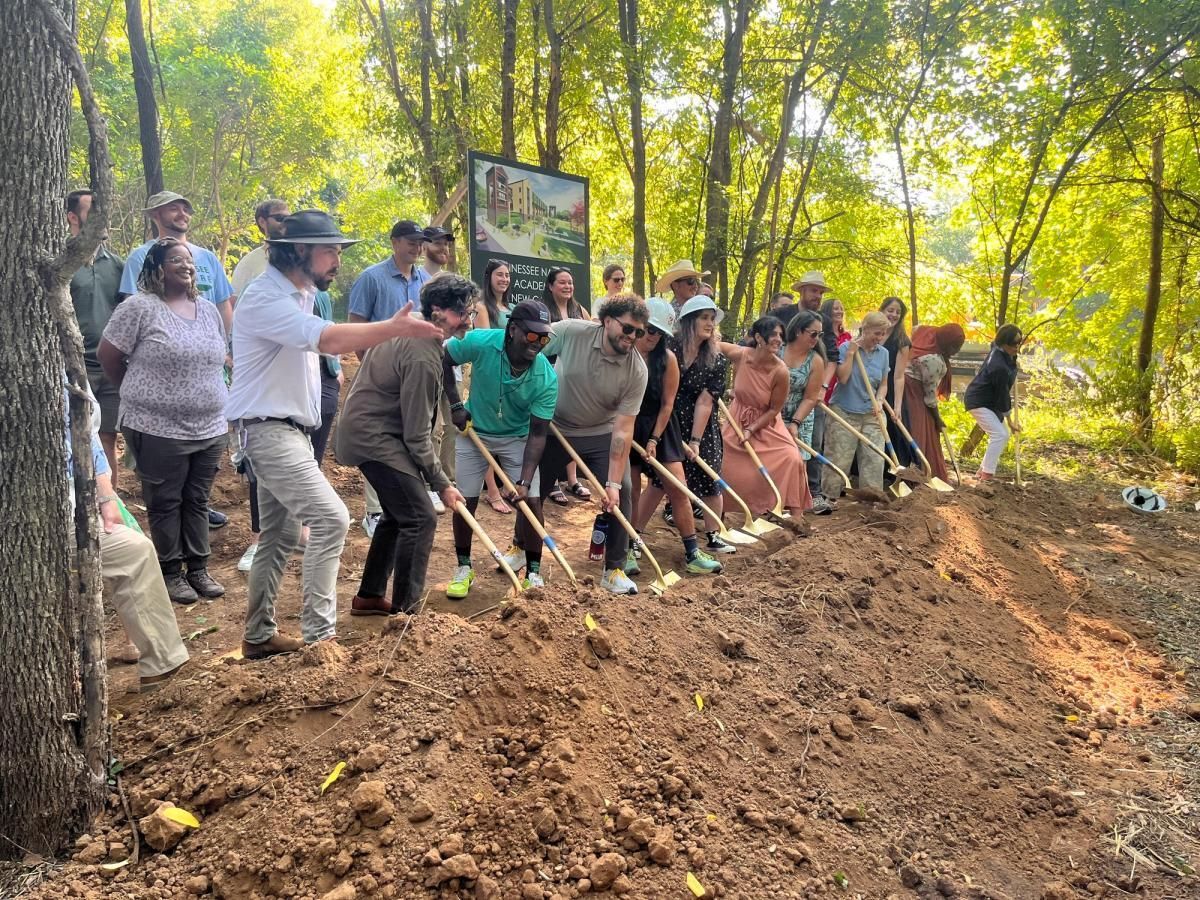
Tennessee Nature Academy Founder and Director Jay Renfro told the Tennessee Public Charter School Commission last week that his school often faces uneven lending standards when financing school facilities. This makes it harder for growing schools like his to secure a permanent home.
Inconsistent Lending Standards
Renfro described the challenges he’s faced securing funding from national lenders because of the risks associated with special education costs and rising student enrollment, which create inconsistency and uncertainty in lenders’ standards.
“Sometimes, seeing their standards can be a bit of a black box, and there's a bit of uncertainty about what they're looking for,” Renfro said. “And sometimes we see contradicting standards to between the lenders and between some of our goals.”
Renfro cited a handful of reasons lenders have told him his school would be risky to invest in, including a rising number of students with disabilities.
“We think that’s a wonderful thing,” Renfro said. “Tennessee Nature Academy wants to attract those students. We want to retain those students, and we do a good job of that.”
A Discrepancy in Funding
KIPP Nashville founder and executive director Randy Dowell also addressed the board and answered questions about challenges affecting charter school operations like his.
Dowell highlighted a “massive funding gap” for school facilities between public charter schools and traditional public schools. He said KIPP Nashville receives about $2,000 less per student than traditional public schools.
“District-run schools, on average, the city is funding those schools at about ($2,000 to $3,000) a year for capital expenses,” Dowell said. “That just goes to the students who do not attend charter schools in the public school system. We (currently have) a $450 allocation within TISA (Tennessee Investment in Student Achievement) that, as more charter schools come online and more students come online in the state, that number will shrink, because it's not set at $450. It’s set at a pot of money that then is distributed across all charter school students.”
The TISA formula determines how much funding each public school receives from the state. Every school receives a base amount of funding before three variables come into play: weighted funding (additional dollars provided for students needing more support, such as those with disabilities, those who are English-learners, and those from low-income families), direct funding (money dedicated to programs including reading instruction, CTE (career and technical education) programs, and college preparation and outcomes funding (monetary support tied to student academic success and achievement).
Dowell said KIPP Nashville, which has an average GPA of 3.6 per student across its 10 schools, has had to get creative with its financing strategies, including taking out $100 million in loans over the past decade to build new facilities and add student capacity.
Ideas for the Future
Commission member Alan Levine brought up the new public charter school legislation Oklahoma signed into law last May, designed to make it easier and potentially cheaper for charters to access better financing options for buildings and facilities by creating state-supported loan and bond assistance programs.
While Dowell and Renfro had no comments when asked for thoughts on it, Commission Chair Chris Richards noted that the board is actively soliciting ideas to propose to the Tennessee General Assembly.
Dowell did, however, say starting a charter school in Tennessee used to be easier because there were many more empty public school buildings available in struggling neighborhoods.
“And then, in probably the last 10 years, most of the growth in charter schools (has) been in communities that are adding students and growing enrollment more rapidly,” Dowell said. “If you're opening a charter school now, especially in Nashville, you have to have a plan for a facility plan. It has to be a really good facility plan. There's a lot more regulatory scrutiny, both local and at the state (level), so I think times have changed. You have to be well resourced to do that.”