
The Metropolitan Nashville Public Schools (MNPS) board meeting on August 11, 2026, was anything but typical. Though the public comment portion of meetings frequently includes passionate and often critical dialogue from concerned Nashvillians, last week’s criticism came from a former district Teacher of the Year.
The comments were from Samira Hardcastle, an award-winning former art teacher at John F. Kennedy Middle School in Antioch. In her address to the school board, Hardcastle highlighted pressures placed on her from district leaders to “fabricate grades” for a failing student among numerous other serious concerns about district policies.
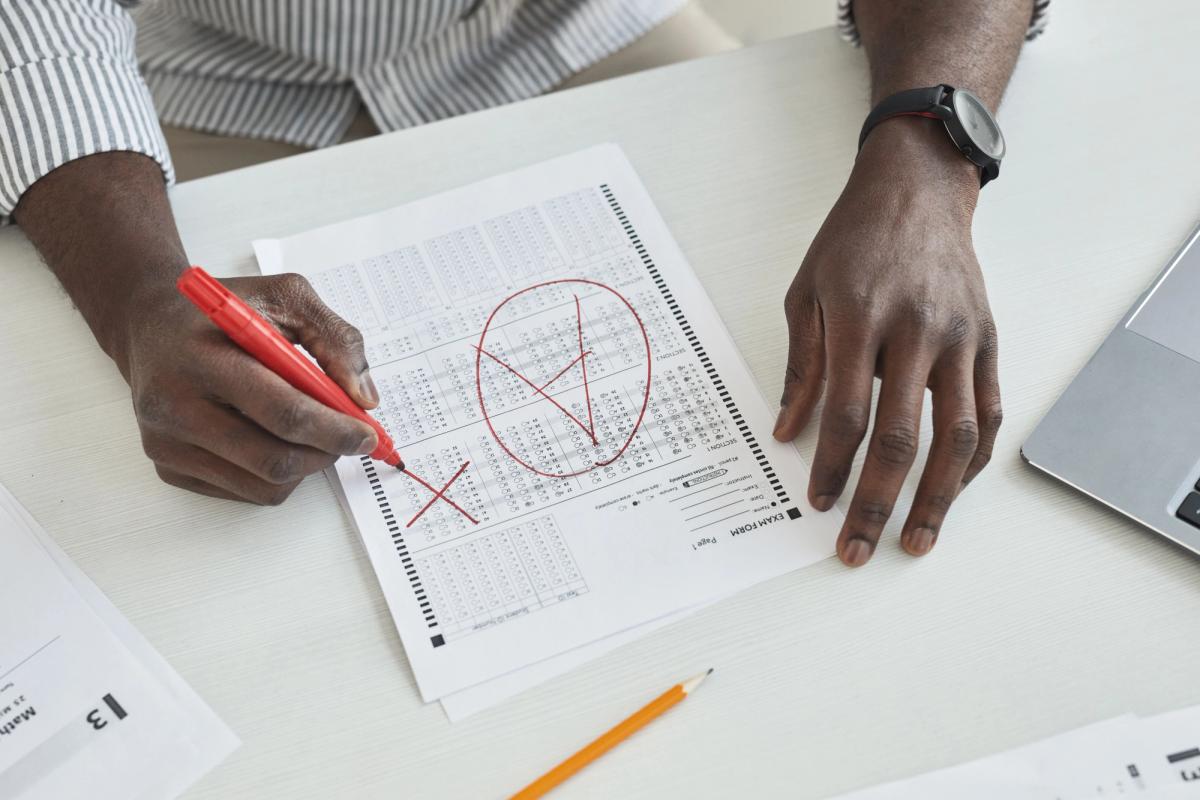
This is a problem not unique to MNPS. Outright fabrication of grades is the most extreme example of grade inflation, a phenomenon that has been studied for over a decade, often leading to disagreement among educators and advocates.
The core questions researchers and advocates have sought to answer are:
- Is grade inflation happening, and if so, to what extent?
- If grade inflation is happening, what impact does it have on student outcomes?
- If the impact on student outcomes is negative, what can states and districts do to mitigate harmful effects?
Is Grade Inflation Happening
Yes—according to overwhelming research.A 2016 study from the Thomas B. Fordham Institute analyzed student-level Algebra I data from North Carolina from 2004-2016, finding that while average GPAs and course grades had steadily increased over the period, student scores on statewide end-of-course (EOC) exams and ACT did not follow the same trend.
The study concluded that course grades were a weak predictor of the overall mastery of Algebra I required for success on standardized tests.
More recently, a 2026 study from economist Jeffery Denning of the University of Texas at Austin analyzed over one million students, finding average grades had increased by nearly a letter grade over the last forty years.
How Does Grade Inflation Impact Students
Though over a decade of research proves the existence of grade inflation, its ultimate impact remains a subject of disagreement among some.
The Denning study asserted a startling finding:students exposed to higher rates of average grade inflation policies were less likely to graduate high school, less likely to score well on the ACT and statewide exams, and less likely to attend postsecondary education programs.
The economic impact is even more alarming, with the study finding that teachers inflating their students’ grades by one standard deviation resulted in $213,872 less in collective lifetime earnings per year for the students. That means every year a student is exposed to average grade inflation, their lifetime earnings will decrease.
Despite the evidence, teachers’ unions have refused to acknowledge a reality both research and common sense appear to dictate—grade inflation is having a negative impact on students.
The National Education Association (NEA), the nation’s largest teachers’ union, admitted that grade inflation is happening, but suggested the issue was a “red herring,” and another attempt to “vilify educators”.
The NEA argued grade inflation is not the problem, but rather the concept of grading itself, with one affiliated teacher saying, “I think about the problem of grades a lot like I think about our reliance on fossil fuels: Both are so entrenched in our lives that it’s hard to see a realistic way out. And yet we must.”
How can States and Districts fix the Problem
Teachers’ unions’ proposed solutions largely consist of alternative grading systems to traditional letter grades and a reduction in standardized testing, arguing the current system places too much stress on students and can be demotivating.
Though student mental health is undoubtedly a real issue, if attempts to insulate students and parents from the uncomfortable reality of a disappointing grade or test score are the solution, students will be inadequately prepared for a world that sometimes throws uncomfortable realities their way.
Moreover, NEA’s arguments distract from the real problem. Students having fewer opportunities and less success post-graduation is the actual issue. Grade inflation, and more broadly a departure from accountability, is merely one of the chief causes.
Changing the grading system would only serve to hide this causation, allowing union advocates to reframe the problem as a money issue and shift blame to lawmakers for not spending enough on schools.
These arguments from union leaders ignore any differentiation between qualitative and quantitative education spending as well as Tennessee’s $11 billion investment in public schools since the passage of its updated funding formula in 2022—currently 28 percent of the state’s most recent budget.
This proposed abandonment of objective standards and quality measures has been a longtime goal of Tennessee’s teachers’ union, which dubbed the “Freedom to Teach” bill in 2025.In its initial form, the bill would have substantially reduced statewide testing in Tennessee, effectively concealing the reality of grade inflation from parents and lawmakers.
The legislature ultimately amended the bill, deciding to study the issues further before making any radical changes.
The wisdom of this decision is even more apparent in hindsight, especially in light of Samira Hardcastle’s testimony. Statewide testing is the only objective measure parents, school leaders, and lawmakers have to accurately pinpoint where grade inflation is occurring. Without the data provided by the tests, our leaders would be flying blind, quietly hoping students’ course grades are an accurate representation of their actual mastery of the subject area.
Maintaining a strong system of statewide exams and the accountability they provide will continue to be critical as Tennessee leaders seek to work towards becoming a world-class public education system.
Samira Hardcastle was brave enough to bring the issue to the public’s attention, but how many other teachers have had the same experience of being pressured to inflate student grades? If the practice is as prevalent as many suspect, the solution is not to avoid accountability as the teacher unions suggest but to embrace it as a means to continue improving and ensuring better opportunities for our students.
The Tennessee Firefly is a project of and funded by Tennesseans for Student Success.