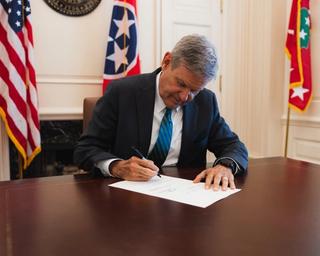

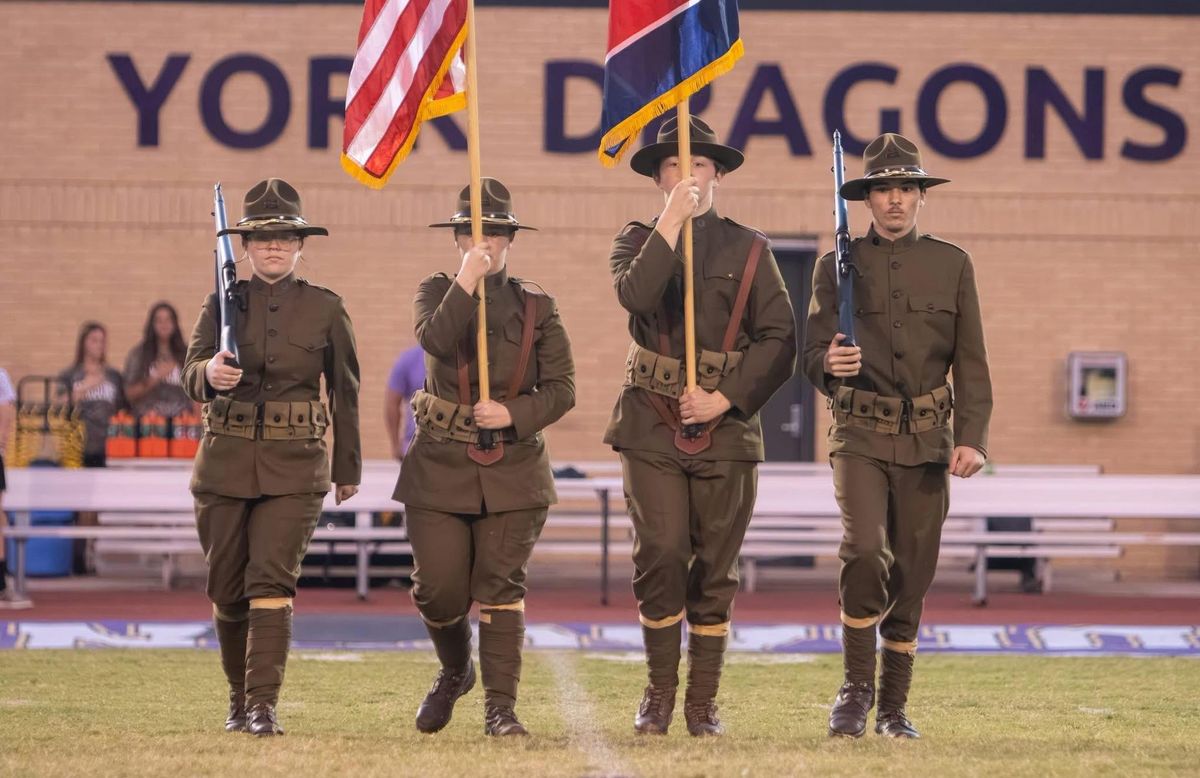
Members of the Tennessee State Board of Education meet this morning at Alvin C. York Agricultural Institute in Jamestown, a state-run high school whose Ready Graduate rate was the highest the state reported for any school system.
In the state’s results for the class of 2025, 96 of the 100 students in York’s class met the Ready Graduate bar. Statewide, 57.3 percent of graduates did, up from 53.1 percent for the class of 2024.
York also led the state for the class of 2024, when 113 of its 116 students qualified, a Tennessee Firefly analysis of the state’s files found. The state counts the school as its own school system, and its school-level file lists York among 24 high schools above 95 percent.
The Tennessee Department of Education counts a student as a Ready Graduate after the student graduates on time and meets one of four marks. The student must post an ACT score of at least 21 or an SAT score of 1060, or complete four early postsecondary opportunities (EPSOs), such as dual enrollment or Advanced Placement courses. Two EPSOs also count when paired with an industry credential or a score of 31 on the military’s Armed Services Vocational Aptitude Battery (ASVAB).
The Department wrote that the Ready Graduate measure is meant “to recognize and reward schools and districts whose high school graduates demonstrate readiness for meaningful postsecondary education, training programs, and/or workforce entry.” Every student in a graduating class’s initial cohort counts, so a student who doesn’t finish on time lowers a school’s rate.
Starting with the 2025-26 school year, the state replaced the Ready Graduate measure in its federal accountability system with a College and Career Readiness rate that counts each year’s graduating class rather than the class before it.
York’s Record
York’s top results held for every student subgroup large enough to report. Thirty-nine of its 41 economically disadvantaged students in the class of 2025 qualified, or 95.1 percent, compared with 44.6 percent of economically disadvantaged students statewide.
The school graduated 98 of its 100 students in the class of 2025 on time, compared with 92.3 percent of the class statewide. For the class of 2026, the state’s calculation puts York’s graduation rate above 99 percent, compared with 93.2 percent statewide.
York earned a B on its 2024-25 School Letter Grade, with an A for academic growth.
Alvin C. York, the World War I hero, started the school in his home county as a private agricultural school in 1926, aiming to give rural students a chance at a high school education. He turned the school over to the state in 1937, when the Great Depression strained its finances.
The state still directly runs York as a public high school, and the school calls itself the only comprehensive high school in the country that a state government finances and operates. It is celebrating 100 years under the motto “Prepare and Excel.”
How Other Systems Compare
Among the 106 school systems with at least 100 students in the class of 2025, Henderson County ranked just below York with 95.6 percent of its students achieving Ready Graduate status. Milan followed at 95.0 percent, then Chester County at 92.9 percent, Macon County at 91.5 percent, and Dyer County at 91.0 percent.
Several systems with smaller classes also topped 90 percent, including Clay County, Jackson County, Van Buren County, and Fentress County Schools, the district in York’s home county, at 91.8 percent.
At the other end of the spectrum, 10 of the 106 school systems had fewer than 40 percent of students meeting Ready Graduate criteria. 
In the state’s two largest districts, 58.4 percent of the class in Memphis-Shelby County Schools and 37.6 percent in Metro Nashville Public Schools met the bar for Ready Graduate.
On the Board’s Agenda
This morning’s meeting falls during Career Development Month, which the Tennessee Department of Education is marking this November with a focus on Career and Technical Education (CTE) and access to college courses for high school students.
“The goal is for every Tennessee student to gain a solid academic foundation and put that learning to use through career exploration and practical, real-world skills,” wrote Lizzette Reynolds, Commissioner of Education. “This prepares them for independence and success in whichever path they choose after graduation, whether that’s entering the workforce, attending a two-year, four-year, or technical college, or serving in the military.”
The board’s meeting at York begins at 9 a.m. Its agenda includes final votes on revised standards for CTE courses in five fields, including agriculture, and on a statewide framework for assessing the quality of work-based learning programs.