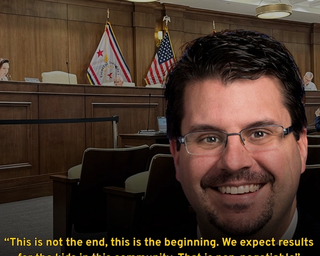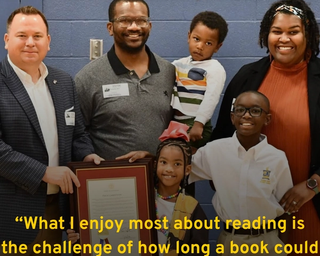

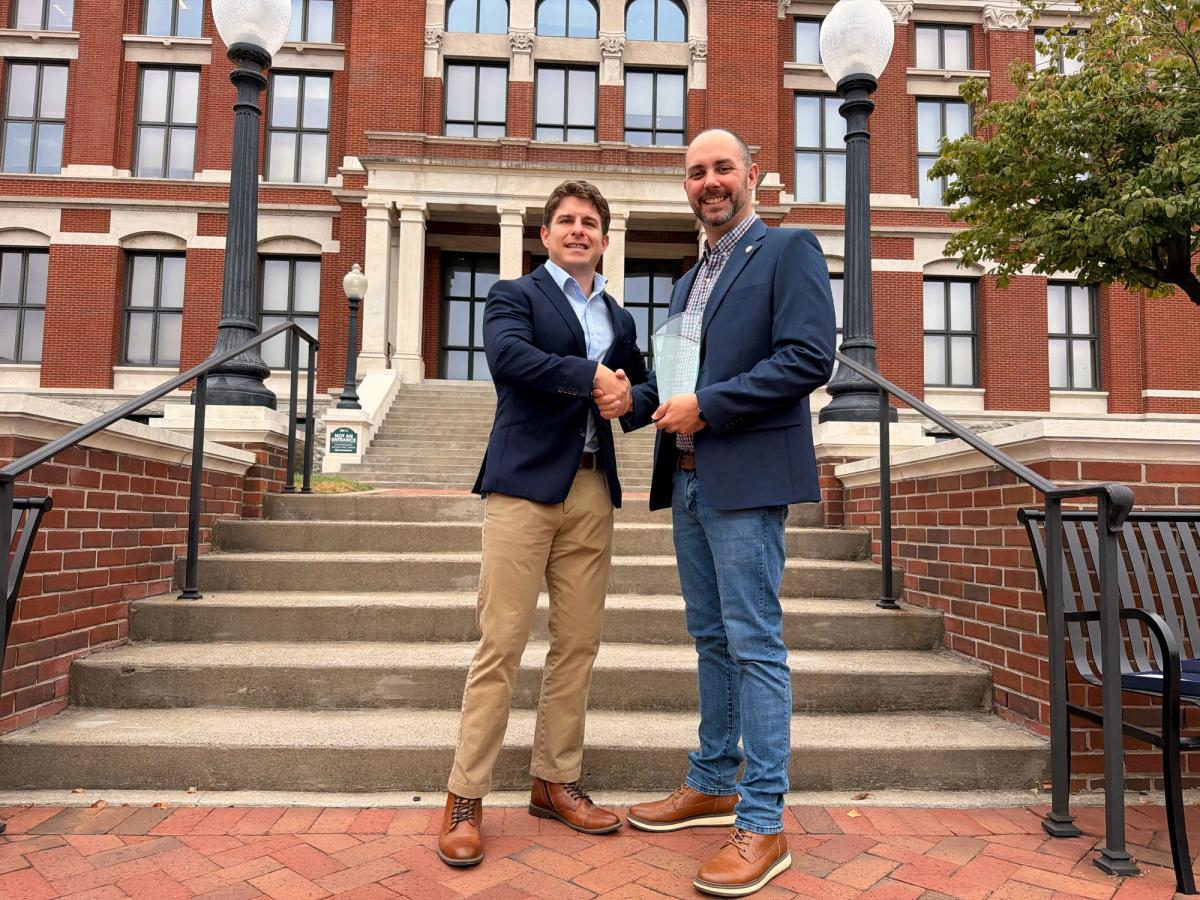
Representative Aron Maberry, R-Clarksville, accepted an award Thursday by highlighting some of Tennessee’s latest public education priorities.
Maberry is the fourth legislator to receive the Tennesseans for Student Success (TSS) Action Award, which recognizes lawmakers who put student outcomes first when championing education policies and legislation. So far this year, TSS has also given Action Awards to Sen. Adam Lowe, R-Calhoun, Rep. William Slater, R-Gallatin, and Sen. Bill Powers, R-Clarksville.
Public Education: A Top Priority
Maberry spoke to the Tennessee Firefly in front of the Montgomery County Court in Clarksville Thursday morning and said public education was the General Assembly’s top priority during the previous legislative session, citing a $339 million addition to the state’s public education budget. The budget expansion added 15,000 more Education Freedom Scholarship seats, increased Tennessee Investment in Student Achievement (TISA) funding, raised starting teacher salaries to $50,000, funded summer learning camps, added $10 million in safety grants and $3 million in behavioral health services, and doubled the amount of money approved to fund public charter schools.
“I've been working with kids and students for nearly 20 years in ministry, and that’s the next generation,” Maberry said, highlighting his track record of supporting students’ futures in a variety of ways. “When we talk about education, we talk about the next generation of our kids and their futures.”
Student Wellbeing
Maberry also pointed to two policies that would affect students’ day-to-day experiences, limiting screen time in classrooms and expanding recess time, as some of his favorite education-related legislative successes during this past session.
For Maberry, the common thread is an obligation to focus on students’ futures. He described the previous session as producing “a lot of great highlights.”
In essence, Maberry underscored education as a generational investment.
“It's so vitally important that we invest the time, energy, and money into our kids and what's best for them ultimately in regard to education choices,” Maberry said.