
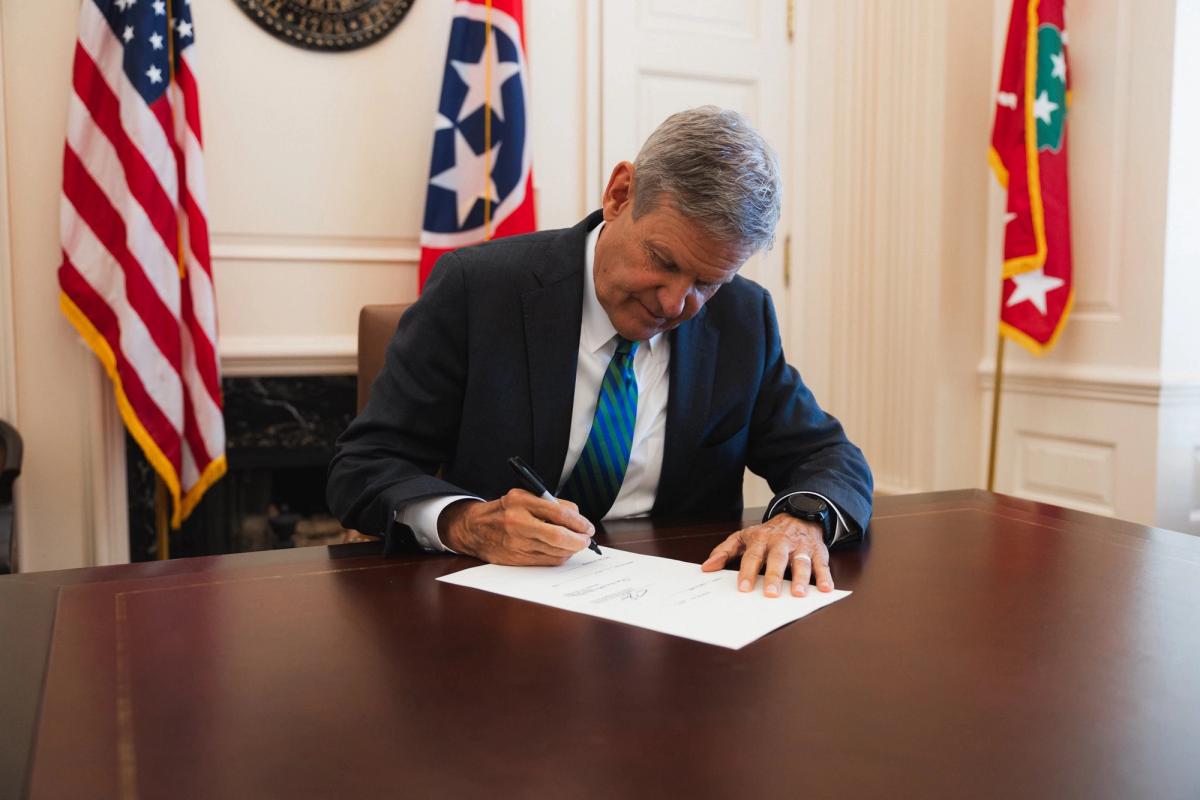
Tennessee Governor Bill Lee signed legislation on Thursday to expand the Education Freedom Scholarship program to an additional 15,000 students next fall.
Republican lawmakers approved the legislation last month, raising the number of eligible students who can use tax dollars for private school expenses from 20,000 to 35,000. Expanding the program was among Governor Lee’s top priorities in his final year in office, and he’s argued expansion is needed because the number of applicants has exceeded program limits each year.
“Long before I became Governor, I believed a quality education can change the trajectory of a child’s life,” said Governor Lee. “I’m deeply grateful for the General Assembly’s partnership to expand the Education Freedom Scholarship Program and give more Tennessee families the opportunity to choose the learning environment that best fits their child’s unique needs.”
For the 2026-27 school year, the Tennessee Department of Education (TDOE) received applications from more than 56,000 families, according to a news release sent to the Tennessee Firefly. All 35,000 available scholarships are currently reserved and awaiting acceptance. The department says that of those, 81 percent of new scholarships were awarded to applicants who meet income eligibility requirements or qualify through the Individualized Education Account (IEA) and Education Savings Account (ESA) Programs.
Supporters Applaud Legislation’s Passage
Education advocacy organization TennesseeCAN was among those pushing for an expansion of the program this year. Following Governor Lee’s signature, TennesseeCAN Executive Director Chelsea Crawford issued a statement thanking the governor.
“This expansion means that more families, regardless of their background or income, can choose to send their child to the public school, charter school, or private school that will best support their individual learning needs,” Crawford said.
History and Bipartisan Opposition
Lawmakers initially approved the Education Freedom Scholarship program during a special session last year.
The program was unanimously opposed by Democrats who felt it would divert needed dollars away from public schools. 28 Republicans opposed the initial program last year.
8 Republican Senators opposed expansion this year, along with 9 Republican House members.