

Families seeking a public school outside their home district would get a set window to apply each semester and the right to appeal a denial under an open enrollment plan the Tennessee Senate passed 30-0 in March.
Senate Bill 328, sponsored by Senators Adam Lowe, R-Calhoun, and Dawn White, R-Murfreesboro, would have made it easier for families to enroll their children in school districts outside the one they’re zoned for, sometimes called open enrollment. It failed on a tie vote in the House K-12 Subcommittee in March and did not become law.
Under current law, districts must hold an application window of at least 30 days before each school year, but only for families who live in the district. A student from another district can transfer only at the discretion of the receiving school board, the legislature’s fiscal memorandum on the bill explains. In some cases, districts may refuse to permit open enrollment entirely. 
How It Would Work for Families
The version the Senate passed would require every district to hold an open enrollment period each semester, opening at least 45 days before the semester starts, for students zoned elsewhere, including those from other districts. At least two weeks before each window, districts would post their open seats by school, grade, class, and program.
Districts would have to answer each application in writing within 10 days of receiving it or of the window closing, whichever is later, and explain any denial. Parents could then appeal within 10 days to an independent panel of at least three people who had no part in the decision, and the panel would have 30 days to rule.
A district could deny enrollment only if there is no space, the student does not meet a program’s entry criteria that apply to all students, a desegregation plan requires it, or the student has been expelled or suspended.
Students admitted this way could not be turned away the next year or made to reapply, as long as they keep up satisfactory attendance, behavior, and effort. Families would provide their own transportation, and districts could still charge tuition to students from outside their boundaries.
Education advocacy organization Tennesseans for Student Success (TSS) supported the bill. A February poll conducted by TSS found 82.2 percent of respondents support “allowing students to enroll in public schools outside their zoned schools when space is available.”
“The current open enrollment process lacks the consistency and fairness that families deserve,” wrote Lana Skelo, TSS President and CEO, in a statement after the Senate vote. “This legislation will correct that by providing parents with greater flexibility to send their children to schools outside their zoned district and ensure that student success isn't limited by a zip code or bureaucratically drawn line.”
The Tennessee Firefly is a project of and supported by Tennesseans for Student Success.
Where It Stopped in the House
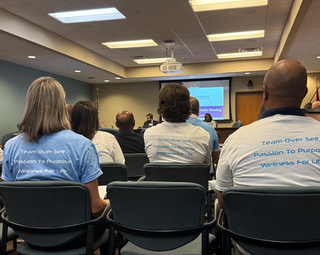
The House version’s sponsor, Representative William Slater, R-Gallatin, and three other Republicans on the Education K-12 Subcommittee voted to support the bill. Representatives Kirk Haston, R-Lobelville, and Mark White, R-Memphis, joined Democrats Yusuf Hakeem, D-Chattanooga, and Sam McKenzie, D-Knoxville, in voting no.
At the subcommittee meeting, Hakeem raised concerns about students who remain when classmates leave for another school, the Tennessee Firefly reported.
“I really question if we’re looking at the whole system or the whole school, and just looking at this concept of free will,” said Hakeem. “If you have within a school, people who have been looked on as being less, being looked on as being not as capable, you don’t have a balance; you don’t have someone, other students, that’s sort of an inspiration to those to improve themselves, but we see that as free will and I think you (are) harming the students.”
Opponents also asked how the bill would affect district budgets. The fiscal memorandum rated the bill’s fiscal impact as not significant. State funding follows a student who transfers, it says.
In an email to a subcommittee member before the vote, obtained by the Tennessee Firefly, Collierville Schools Superintendent Dr. Russell Dyer raised a different concern.
“The bill mandates multiple enrollment windows, public capacity postings, written decisions, appeal panels, and extensive reporting requirements,” wrote Dyer. “These administrative burdens consume time and resources without evidence that mandated open enrollment improves student outcomes, particularly in high‑performing municipal districts.”
According to a Fordham Institute study on inter-district open enrollment, consistent participation in open enrollment programs in Ohio led to positive gains in achievement, with the most substantial gains occurring among African American students. 
What Happens Next
Governor-Elect Marsha Blackburn told the Tennessee Firefly’s On the Fly podcast in February that she supported removing barriers to open enrollment.
“So, removing those barriers and those obstacles, that's what needs to be on the table,” said Blackburn.
The 115th General Assembly convenes at noon on January 12. Bills do not carry over to a new General Assembly, so open enrollment would need a new bill, and the filing deadline typically falls in early February.