
New federal guidance released Oct. 1 provides states, donors, and scholarship-granting organizations with a clearer roadmap for implementing the Education Freedom Tax Credit, a new federal program designed to encourage private donations for K-12 scholarships.
For Tennessee, which has already opted into the program, the guidance marks an important step toward implementation. The state must establish a process for approving eligible scholarship-granting organizations (SGOs), while nonprofits interested in providing scholarships can begin preparing their applications and financial plans.
The U.S. Department of the Treasury and the Internal Revenue Service released two sets of regulations: temporary rules establishing immediate administrative procedures for participating states and proposed rules addressing the program's broader requirements. Together, the regulations provide a framework for the program's scheduled Jan. 1, 2027, launch.
The guidance also clarifies the federal tax credit available to donors, the financial requirements scholarship organizations must meet, and how states can evaluate newly formed organizations without an established track record.
For Tennessee, the next phase will involve translating those federal requirements into a state-level application and certification process. The state’s SGO application portal has not yet launched; however, new-start SGOs may begin federal filings with the IRS and state filings with the Secretary of State.
Key Deadlines for States
The temporary regulations establish two important deadlines for states preparing to participate in the program.
States must submit an advance election to participate by Jan. 1, 2027. They must then submit their initial lists of eligible scholarship-granting organizations by Feb. 15, 2027, to complete the election process for the program's first year.
In subsequent years, states must submit their lists of eligible organizations by Jan. 1.
These deadlines give Tennessee and other participating states a limited window to establish procedures for reviewing organizations and determining which applicants meet the federal requirements.
The state must also establish procedures to verify that organizations meet applicable requirements and to remove organizations that no longer qualify.
The proposed regulations address the program's broader operation, including scholarship eligibility, donor contributions, financial requirements, and reporting obligations.
Unlike the temporary regulations, the proposed rules remain subject to public comment and potential revision before being finalized. However, the Treasury Department and IRS have indicated that states, taxpayers, and scholarship-granting organizations may rely on the proposed regulations as they prepare for the program's 2027 launch.
That distinction matters. States and prospective scholarship providers can begin preparing now rather than waiting for the entire federal rulemaking process to conclude.
Understanding the $1,700 Tax Credit
One of the most important details in the new guidance is the distinction between the value of the federal tax credit and the amount of a scholarship awarded to a student.
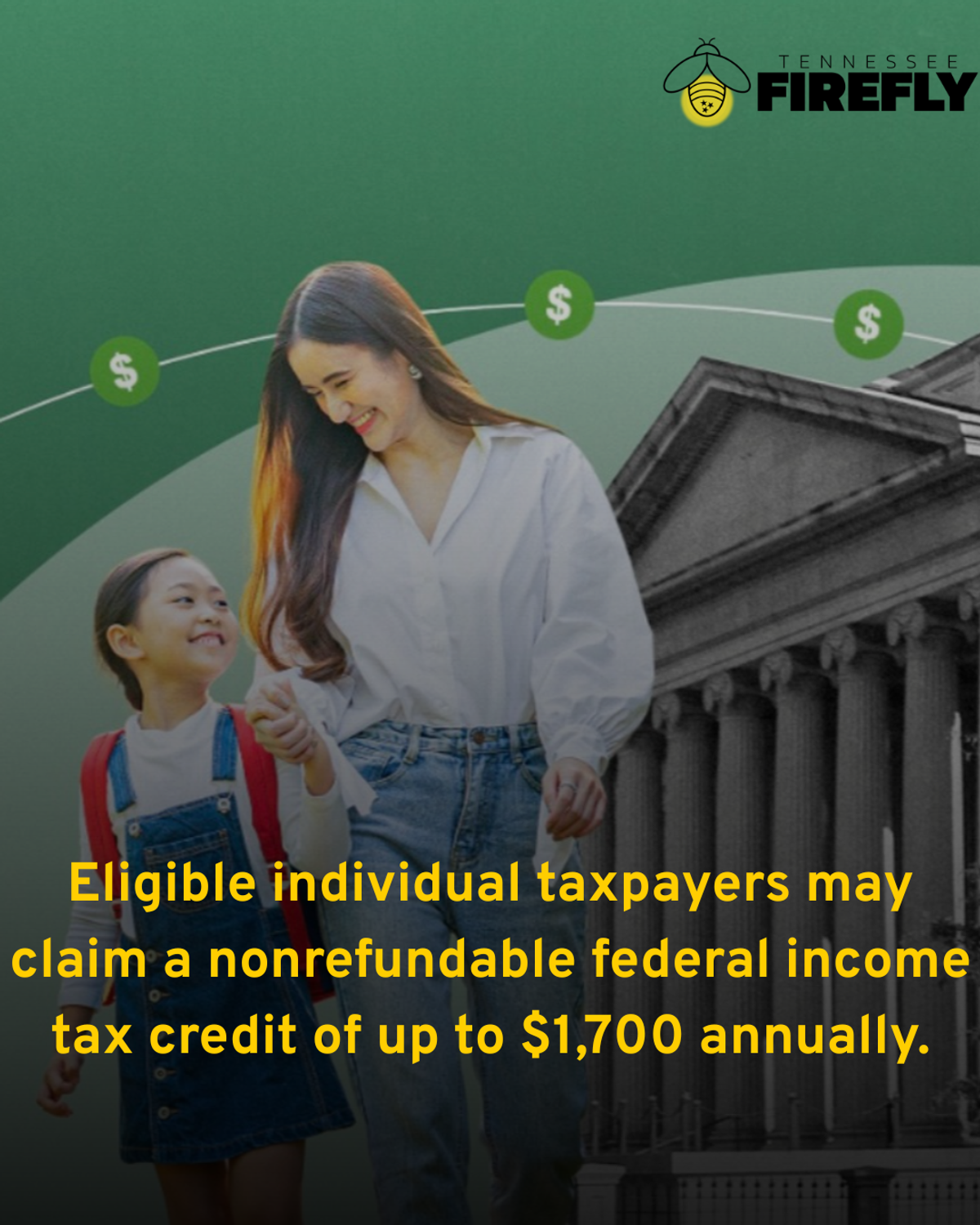
Under the program, eligible individual taxpayers may claim a nonrefundable federal income tax credit of up to $1,700 annually for qualifying cash contributions to eligible scholarship-granting organizations. Married couples filing jointly may claim a combined credit of up to $3,400.
The $1,700 figure is the maximum credit available to an individual taxpayer, not a limit on the amount an organization can award in scholarships.
An SGO's scholarship awards will depend on its available resources, the students it serves, and the applicable program requirements. The federal rules do not establish a universal $1,700 cap on individual scholarships.
This distinction allows organizations to pool contributions from multiple donors and use those funds to provide scholarships that cover qualifying educational expenses.
Eligible expenses can include private school tuition, tutoring, special education services, books, school supplies, computers, and other qualifying K-12 education costs.
For donors, the tax credit provides a federal incentive to contribute to eligible scholarship organizations. For participating nonprofits, the program offers a potential funding source to help students access educational opportunities.
Requirements for New SGOs
Under the One Big Beautiful Bill Act (OBBBA), which initially established the Education Freedom Tax Credit, eligible SGOs must show that at least 90% of their spending goes toward qualifying expenses, including tuition, instructional materials, uniforms, and academic supports.
With the release of the temporary rules, new-start SGOs can still apply through their states, even without financial history showing they meet the 90% threshold. States may provisionally approve new-start SGOs based on the merits of the organizations’ governing documents and financial projections.
SGOs will report all revenues and expenditures on their IRS Form 990 at the end of the next taxable year, which will determine whether they remain eligible.