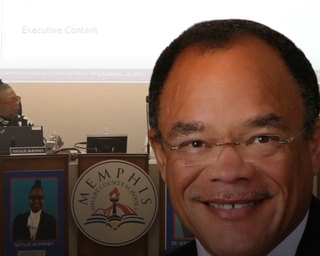


Some students attending Metro Nashville Public Schools (MNPS) will need to reset their alarms for the 2026-2027 school year, and the district now faces the challenge of getting them there under the new bell time schedule.
During the school board’s meeting on Tuesday, MNPS Chief Operating Officer Maura Sullivan briefed the board on how the district plans to address various challenges that the new start times could pose, specifically regarding school buses and other transportation.
Background
MNPS elementary schools will start 10 minutes later, at 8:10 a.m., and release at 3:10 p.m., while high schools will begin 20 minutes later, at 7:25 a.m., and release at 2:25 p.m. While most schools will adhere to these changes, some magnet schools and public charter schools, for instance, will be unaffected.
MNPS Board Members deliberated three start-time proposals during their meeting last February before ultimately approving the change for elementary and high schools, dubbed “squeeze.”
The decision was made in response to complaints from families about the district's high school start times, the earliest in the state, as well as a late-2025 survey of more than 16,000 respondents, in which 67 percent supported adjusting high school start times.
This past January, MNPS conducted six town halls to gather additional feedback from families and hired the consulting firm 4MATIV to develop the three proposals. However, 4MATIV warned that changes could result in a variety of problems, including school bus challenges and potential impacts on childcare, after-school sports, and high school students’ jobs.
Board Discussion
Sullivan began her presentation on the new school start times to the board by detailing what she called the guiding principles: “safety, clear communication, and building an integrated transition that leads to long-term system excellence.”
Implementation is divided into three phases, with one already completed and the final two focused on system design and updates. Sullivan explained that the district is coordinating with various partners, including WeGo Public Transit, local police, and crossing guards, to ensure smooth routes and procedures.
In the future, the district’s operations team will provide updated bell schedules, food service schedules, and student arrival times as transportation routes are finalized. Schools will focus on revising staff duty schedules, expanding early supervision, and collaboration with before- and after-school care programs, and the district’s communications team will keep families informed throughout the process, with frequent updates expected as the summer progresses.
“I encourage you to have patience, and I ask that my team members say it with me: blessed are the flexible, for they shall not be bent,” Sullivan said.
MNPS board member Zach Young inquired about tracking student usage of school buses, specifically how the students are being tracked. He asked whether student IDs were being swiped into a system to track how many students were using the buses on a given day, because he could foresee a situation in which more riders than planned would be on a bus.
Sullivan said the Antioch cluster has already begun using a swipe card system, and the rest of the district will gradually begin using it as well.
“We have wanted to have that tracking system for quite some time, and we have been poised to have it,” Sullivan said. “We had some issues at the beginning with some state rules around how to implement it, but we have gotten past that now, and we are beginning the implementation.”
Board member Abigail Tyler also asked Sullivan about school bus staffing concerns, to which Sullivan said the district now employs more drivers than ever and will continue hiring. She also questioned whether the district was prepared to send targeted information to families whose students would use different bus stop locations and have different pickup times. Superintendent Dr. Adrienne Battle stepped in to explain why that should not pose a problem.
“Believe it or not, that actually happens year over year anyway,” Battle said. “Because of the start times, we know that there could be some adjustments, so the normal process has been, and families know this, you go (online), you check, (and) you look for your stop, because, again, year over year, this is actually an annual process where we're looking at routes. We're looking for efficiencies.”