
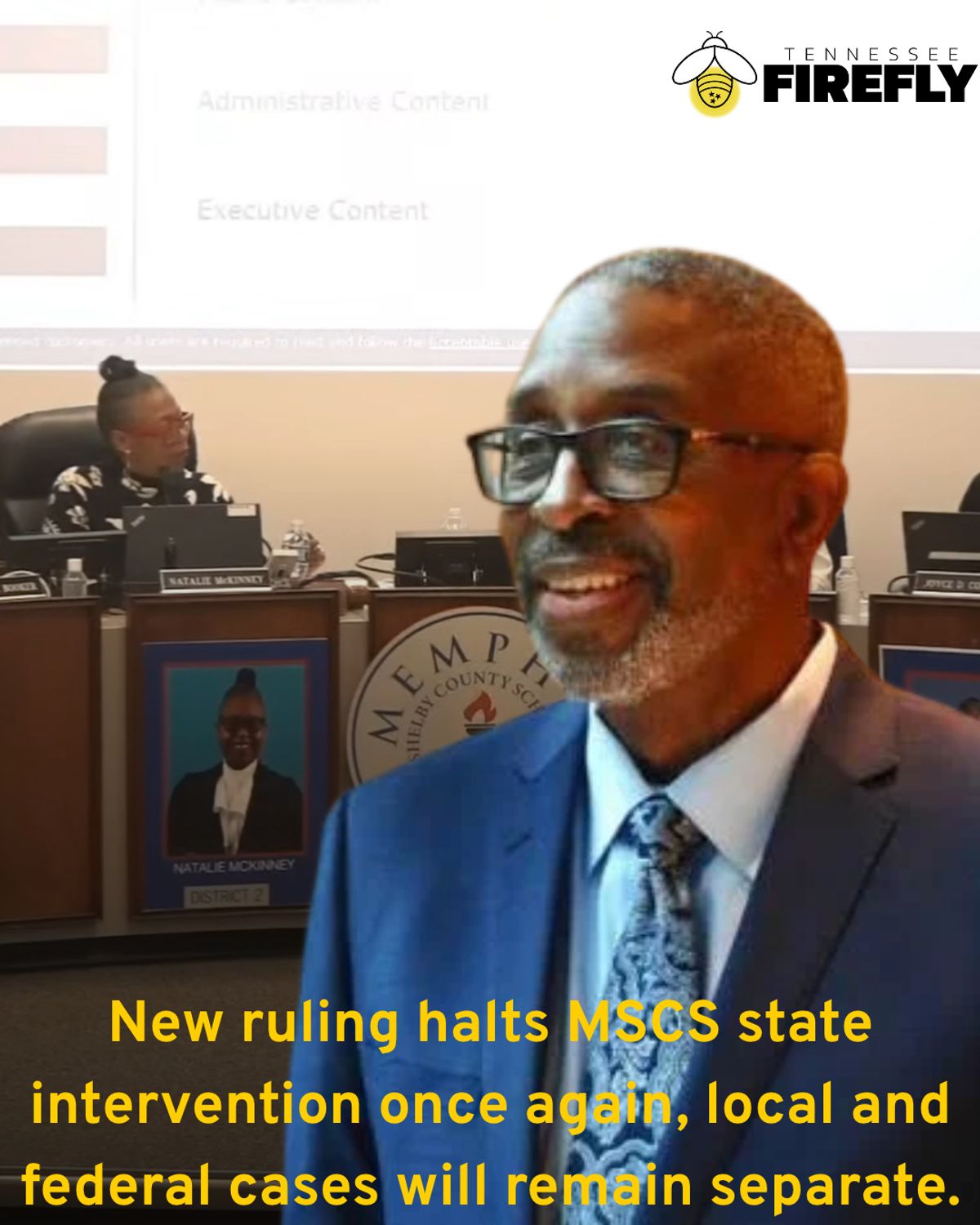
Control of Memphis-Shelby County Schools (MSCS) has returned to its board just days after Tennessee’s state-appointed oversight board was cleared to take charge.
Shelby County Chancellor JoeDae Jenkins temporarily stopped the state intervention Monday, Oct. 19, shortly before the oversight board was scheduled to hold a virtual meeting. The decision came only four days after U.S. District Judge Waverly D. Crenshaw Jr. ended a separate federal court order that kept the oversight board from exercising its authority for more than three months.
Control Changes Again
The latest ruling in the ongoing saga adds another layer to a process that has moved back and forth between courts for months. The oversight board was supposed to begin exercising its authority on July 1, but Crenshaw temporarily stopped the transition while MSCS and Shelby County challenged the state law in federal court. Earlier this month, he said that the delay could end once the state board showed it had the basic systems needed to operate, and Chair Billy Orgel told the court the board was ready to begin.
Crenshaw lifted his order on Oct. 15, giving the oversight board authority over major district decisions, including reviewing large contracts, changing the district budget, and other areas of MSCS operations. However, that authority lasted only a few days before the separate Shelby County case halted its progress.
Two Court Cases Moving Separately
The new pause comes from a different lawsuit than the one that first stopped the intervention. MSCS and Shelby County filed the Chancery Court case earlier this month, while their federal case remains active. District and county leaders changed the local complaint by removing claims that the intervention violates the Tennessee Constitution in their latest bid for a temporary stoppage.
The local case instead now focuses on whether the state had enough evidence to place MSCS under the intervention law in the first place. MSCS and Shelby County also argue that transferring authority to the oversight board before that question is resolved could interfere with district operations.
The federal case, which includes constitutional challenges to the law and continues even though Crenshaw ended his temporary block last week, will remain separate. The district’s elected board has argued against losing local control, while state officials have defended the intervention as a response to concerns involving district governance and student performance. Those governance concerns have included financial oversight. A state audit identified major problems involving district spending and internal controls earlier this year, and MSCS has also been dealing with declining enrollment and teacher retention issues.
The new ruling puts the elected MSCS board back in control while the Chancery Court case moves forward, but it does not settle either lawsuit or decide whether Tennessee’s oversight board will eventually take charge.