

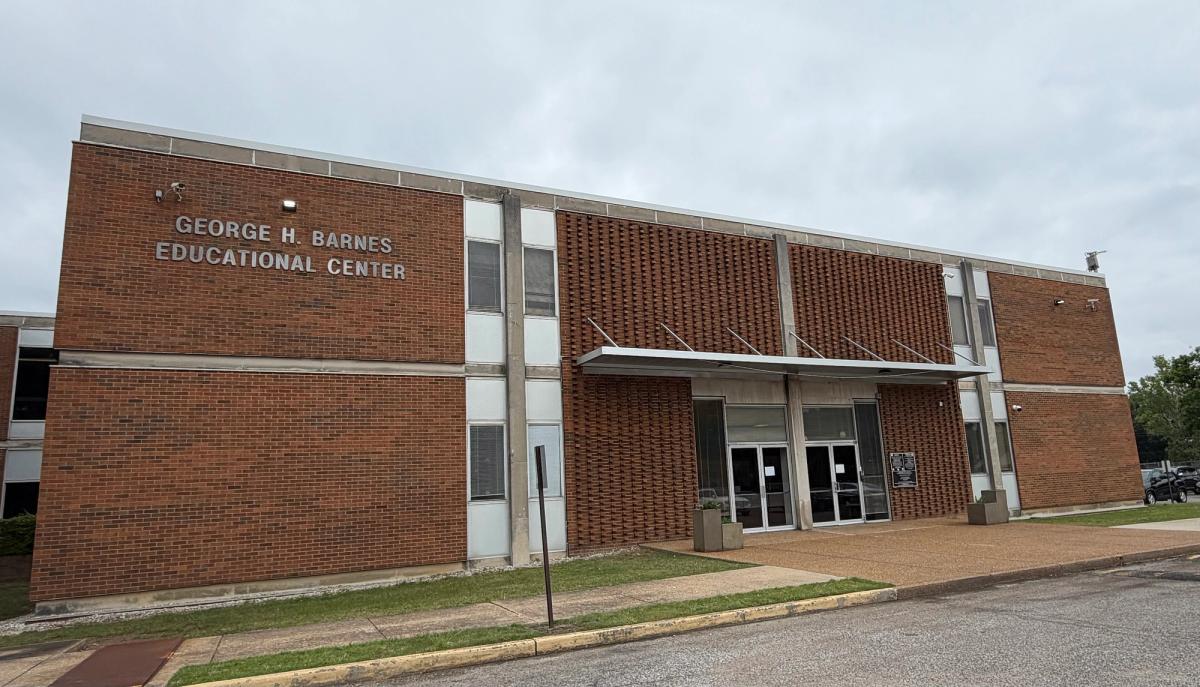
Kirby Middle School and Hillcrest High School, the final two schools in Tennessee’s Achievement School District (ASD), are run this school year by Memphis-Shelby County Schools (MSCS), completing a long-awaited plan to close the state-run district.
A 2025 law required the Tennessee Department of Education to “implement a transition plan to close the ASD and to release all schools currently assigned to the ASD before the start of the 2026-2027 school year.” Lawmakers passed it in April 2025, and Governor Bill Lee signed it that May.
The ASD was created as part of the First to the Top Act of 2010, which included a provision allowing the Commissioner of Education to require, as an intervention, the state’s lowest-performing schools to be moved into a state-run district for increased accountability, the State Comptroller’s Office of Research and Education Accountability wrote in a 2023 summary. Department figures in that summary show the ASD grew from six schools in 2012-13 to 33 in 2016-17.
By 2021-22, the ASD served more than 8,300 students in 26 schools: 24 in Shelby County and two in Davidson County. Schools could stay in the ASD for no more than 10 years.
Where the Schools Went
After the 2021-22 school year, three ASD schools closed permanently, four returned to MSCS, and three moved to the Tennessee Public Charter School Commission, the summary shows. MSCS took back Fairley High, Humes Middle, and MLK College Prep for the 2024-25 school year, with plans to move Humes students to Booker T. Washington School and MLK College Prep students to Trezevant High School, district records show.
By 2024-25, the ASD was down to three schools with 1,412 students, the department’s annual report on public charter schools shows. IOTA Community Schools, formerly Green Dot Public Schools Tennessee, ran all three.
Wooddale Middle School moved first. The Commission overturned MSCS’s denial of Wooddale’s charter application in 2024, and the school has operated as a public charter school under the Commission since the 2025-26 school year.
IOTA also applied to MSCS for new charters to keep operating Kirby and Hillcrest. The MSCS board denied both applications in April 2025 and the amended versions that July. In October 2025, the Commission upheld both denials, its minutes show.
In her written recommendations, Commission Executive Director Tess Stovall praised how IOTA, the schools’ sponsor, engages with students and the community, but wrote that Kirby and Hillcrest had each “consistently performed below the local district in proficiency.”
“I believe that the sponsor has identified and deeply understands the needs of its community and has developed a mission and vision that is specifically targeted to meet those needs, and yet good intentions cannot override the track record of academic performance,” wrote Stovall in her recommendation on Kirby.
At the Commission’s public hearings, IOTA said most of its students arrived behind. By its count, 81 percent of students entering Kirby were below grade level in reading and 84 percent in math, and at Hillcrest the figures were 85 percent and 75 percent, the Commission’s reports note. IOTA also pointed to stronger growth years, including the top rating at Hillcrest in 2022, and said teacher retention problems caused a later dip there.
On the state’s 2024-25 School Letter Grades, Kirby earned an F and Hillcrest a D. All three ASD schools received the lowest growth rating, Level 1, on the Tennessee Value-Added Assessment System (TVAAS) that year.
MSCS told the Commission in September 2025 that if the schools returned to the district, it would place them in the support structure that fits their priority status, likely its Innovation Zone (iZone), the Commission’s reports note.
What Replaced the ASD
The same 2025 law that implemented closure of the ASD set up a three-tier intervention system for priority schools, a group that includes the bottom 5 percent of schools in performance. Starting with the priority list generated in the 2025-26 school year, each district with priority schools must develop and implement a comprehensive support and improvement plan, approved by the Department, for each identified school.
The Department assigns each school a tier. Districts may choose among the intervention options in the first two tiers, while the Department assigns interventions for schools in the third. Third tier intervention choices are closing the school or, where closing it is not feasible, replacing some or all of its leaders and specific instructional staff.
The State Board of Education is scheduled to approve the Department’s next federal school designations, including Priority Schools, at a special called meeting on December 18, according to the Department’s accountability calendar.