

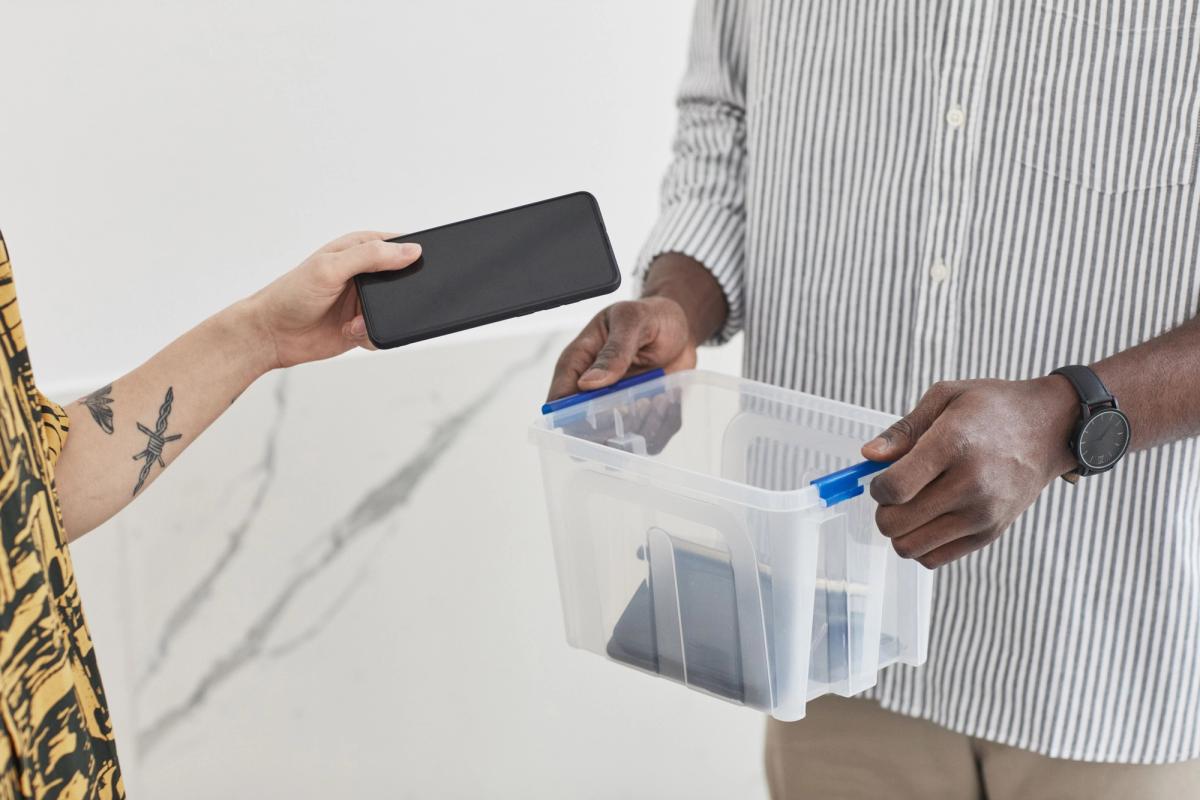
Students in Williamson County Schools are nearing the end of their first semester under a district rule that keeps phones stored away all day, with only high schoolers allowed to use them at lunch.
The Tennessee state legislature passed a law banning phones during instructional time during the 2025 legislative session, leaving the rest of the school day to local school boards to set phone policies. Williamson County’s board barred phone use throughout the school day in June 2025, except during high school lunch periods.
Last November, the Williamson County Board of Education voted 11 to 1 to go a step further and require secure storage of students’ devices starting August 1 of this year. Under the policy, any device seen during school hours can be confiscated for the rest of the day.
Tougher Consequences
Before the semester began, district leaders asked the board to stiffen the penalties written into the policy.
“This summer, our school principals collectively recommended strengthening the schools’ consequences for violations of the Wireless Electronic Communication Device policy,” wrote the district in its request to the board.
Board members approved the change without opposition in August. 
A first offense in middle or high school now means a teacher takes the device to the office, parents are notified, and the violation is logged in the district’s Skyward system. The consequence for a second offense is detention.
In middle and high schools, the previous rules began with a teacher asking the student to put the phone away. The district told the board those first warnings were hard to track in high school hallways and often took several tries before the office stepped in.
Screen Time Beyond Phones
The district’s Screentime and Technology Use Committee, made up of teachers, administrators, parents, and board members, is continuing its review of the policy this school year. Its October 27 presentation, posted for board members ahead of a November 12th work session, focuses on school technology.
That presentation reports students’ September use of school technology fell 20 percent in grades two through five, 11 percent in kindergarten and first grade, and 9 percent in middle school compared with a year earlier, while high school use held steady. A parent portal showing each child’s apps and usage is scheduled for a pilot this month and a districtwide launch in January.
Interim Superintendent Dr. Leigh Webb told the Tennessee Firefly in August that putting the district’s new technology guidance into practice is the biggest challenge the district faces.
“What excites me most is that this initiative reinforces that nothing replaces great teaching and strong relationships between students and teachers,” said Webb. “Technology is a great tool, but only when it enhances great teaching, not when it replaces it.”
The Statewide Question
Tennessee’s 2025 law requires every school district and public charter school to adopt a policy that bars students from using phones and other wireless devices during instructional time, with exceptions for teacher-approved lessons, emergencies, and health needs. Education advocacy organization Tennesseans for Student Success (TSS) supported that law.
“Research increasingly shows the importance of cell phone-free classrooms for student learning and the negative impact of cell phone use on students,” wrote TSS. “Ensuring classrooms remain phone-free will support student success.”
The Tennessee Firefly is a project of and supported by Tennesseans for Student Success.
Governor-Elect Marsha Blackburn campaigned on going further. Her bell-to-bell plan, which she rolled out in July, would bar phones during breaks, lunch, and study halls, not just instructional time.
“When you check in to school, you should check in your cell phone,” wrote her campaign.
Some students told the Williamson County board last November that they worried about staying in touch with their families, FOX 17 reported.
“Would you want your child’s last message to you, taken away?” said John Paul Kukulka, then a junior at Ravenwood High School. “Phones are not the problem; the misuse of phones is the problem.”
The district’s policy says families will be notified by text, email, or phone call in an emergency, and it cites safety experts who warn that calls or texts during an active emergency can draw attention to where students are.
Blackburn’s plan would build on the 2025 law. Lawmakers return when the 115th General Assembly convenes on January 12, days before Blackburn is sworn in.