
Tennessee House District 81 includes West Tennessee’s Tipton County and part of Haywood County. Representative Debra Moody, R-Covington, has held the seat for seven terms but decided not to seek re-election for an eighth term this year.
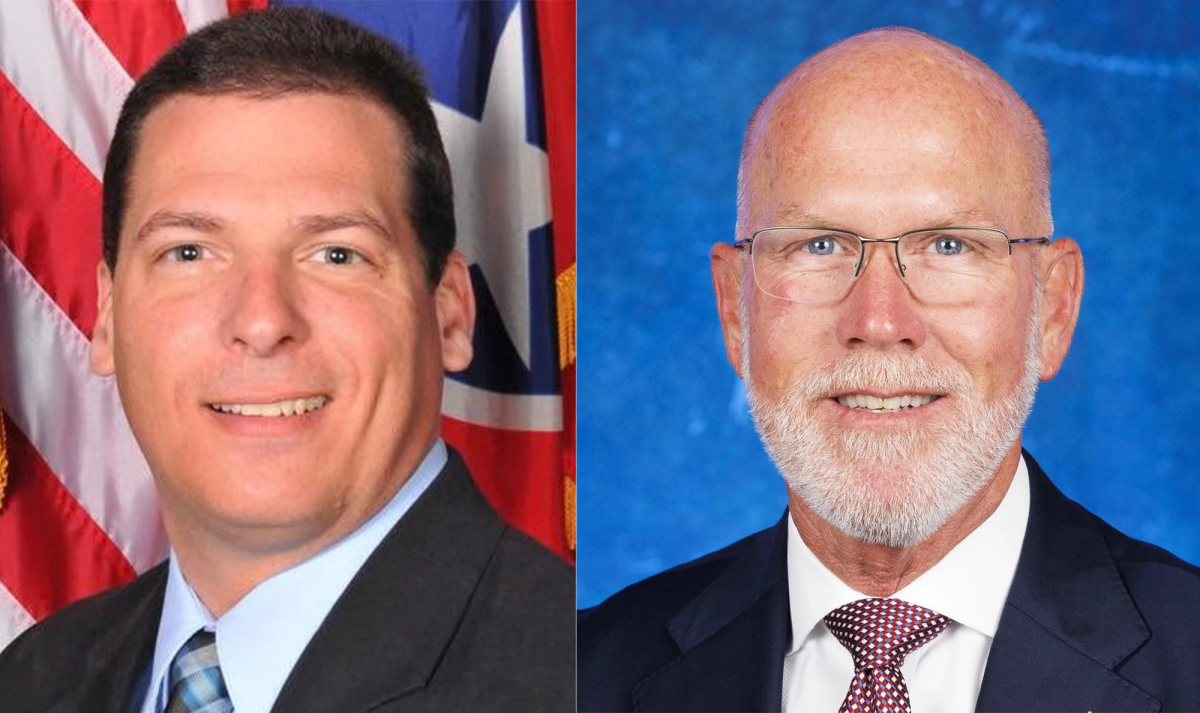
Two Republican challengers qualified to run for the seat, including Tipton County Commissioner Brett Giannini and Covington Mayor Chief of Staff Jason Fleming. Both candidates have highlighted their military backgrounds during the campaign, with Fleming serving in the Tennessee Army National Guard and Giannini serving in the U.S. Air Force.
As part of an ongoing series, the Tennessee Firefly reached out to each with questions about key education issues the General Assembly will grapple with next year.
How Would You Improve Education Outcomes?
Firefly staff asked each candidate how they would improve student outcomes in Tennessee, and this issue, perhaps more than any other, highlighted different priorities. Giannini focused on expanding career and technical education, while Fleming focused on building upon academic standards and high expectations.
“Tennessee has made significant progress in education, and I want to build on that success by supporting excellent teachers, maintaining rigorous academic standards, expanding opportunities for students, and ensuring every public school—traditional or charter—is measured by the same high expectations for student achievement. At the end of the day, my focus isn't on protecting institutions or advancing political agendas. My focus is on helping every Tennessee student reach his or her God-given potential through an education system that is transparent, accountable, and relentlessly focused on student success,” Fleming said.
Giannini provided mostly short answers to Firefly questions, including this one, saying only that he would improve education by “Expanding TCAT (Tennessee Colleges of Applied Technology).”
Tennessee has 22 TCATs across the state providing technical training for workers, including programs for certified medical assistants, welding, truck driving, construction, and farming operations technology.
Preserving Accountability for Students and Teachers
Recent years have seen proposals in the General Assembly to weaken both the state assessment and teacher evaluation systems, despite research showing both have contributed to improved student performance. Both candidates expressed support for the current systems, with Fleming appearing to be more open to changes than Giannini.
“I believe transparency and accountability are essential if we're going to ensure our students are learning and our schools are delivering the results parents and taxpayers expect. That means I support both student assessments and teacher evaluations. The purpose of these tools, however, should not be to create unnecessary bureaucracy or simply ‘teach to the test.’ Their purpose is to provide meaningful information that helps teachers improve instruction, helps parents understand how their children are progressing, and helps school leaders and policymakers identify where additional support or intervention is needed. At the same time, I recognize that there is a balance to be struck. We should regularly evaluate teachers and measure student achievement, but we should also be careful not to consume valuable classroom time with excessive testing or paperwork that takes educators away from teaching. I believe the General Assembly should continue working with teachers, school leaders, and education experts to ensure the frequency and structure of these evaluations provide meaningful data without creating unnecessary burdens,” Fleming said.
“I’m content with the current evaluation pending more debate, but I would resist any attempt to reduce the number for both students and teachers,” Giannini said.
Expanding the Education Freedom Scholarship
The question of whether to expand programs that allow families to use taxpayer dollars for private school expenses, like the Education Freedom Scholarship, has divided candidates in other GOP primaries, but that’s not the case in House District 81.
Giannini told the Firefly that he supports expanding these programs, while Fleming provided a more lengthy explanation for why he also supports that position.
“Yes, I support the Education Freedom Scholarship Program, and I would support expanding it over time if it continues to improve educational opportunities for Tennessee students. My philosophy is simple: education policy should be centered on students, not systems. Every child learns differently, and parents are in the best position to determine the educational environment that gives their child the greatest opportunity to succeed. Expanding educational options gives families greater flexibility while encouraging all schools to continually strive for excellence,” Fleming said. “At the same time, I believe we have a responsibility to maintain a strong public education system. The vast majority of Tennessee students will continue to attend traditional public schools, and those schools remain essential to the success of our communities. As educational choice expands, I believe the state should continue to protect public school systems from sudden financial disruptions through thoughtful ‘hold harmless’ provisions and a responsible transition process.” 
Expanding Public Charter Schools
House District 81 does not currently have a public charter school within its boundaries, but West Tennessee itself continues to see more applicants each year. Charters are free public schools run by a non-profit under a “charter” with a school district or the state.
Giannini told the Firefly that he supports charter school expansion. Fleming also said he supports this kind of school if properly funded.
“Yes, if there is a stable funding stream. Stable funding allows for more long-term planning and also provides stability for staff, students, and programming. However, the competition for recurring funding again competes with other education choice programs. Finding the right balance for students in a particular geographic area will be the challenge. I don't believe there is a ‘one size fits all’ answer to this challenge. Every student is unique, and every parent needs to have available to them the choice that best meets the needs of their student. We as a state have to weigh this against other needs as we prioritize where we devote our finite resources,” Flemming said.
Reducing Barriers to Open Enrollment
This year, lawmakers came close to passing legislation that would make it easier for families to enroll their children in school districts outside of the one they’re zoned for, sometimes called open enrollment. Giannini told the Firefly that he supports reducing barriers to open enrollment, while Fleming provided a more detailed explanation of his views on the issue.
“As a general principle, I support giving parents greater flexibility to choose the public school within their district that they believe is the best fit for their child. When we're talking about schools within the same district or the same funding structure, many of the financial concerns are reduced because the schools are supported by the same taxpayers. In those situations, I believe school districts should have the flexibility to implement open enrollment policies where it makes sense. That said, open enrollment should be managed responsibly. School districts still have to consider classroom capacity, transportation, staffing, and the impact on individual schools. Any policy should ensure that no school becomes overcrowded or that students are displaced because of transfers,” Fleming said.
No Democrat qualified to be on the ballot in House District 81.