
Tennessee students would learn what artificial intelligence is, how it uses data, and why its answers need a human check under revised computer science standards the State Board of Education takes up for a final vote on Friday.
The revision would replace the computer science standards the board approved in February 2023. Districts have had to teach those since the 2024-25 school year, and the new standards would take effect in 2027-28.
Those standards don’t mention artificial intelligence. The version members accepted unanimously on first reading in August do, from kindergarten through high school, a Tennessee Firefly review of the two documents found.
The board’s agenda for Friday notes changes to the standards since first reading but does not describe them.
What the August Version Says
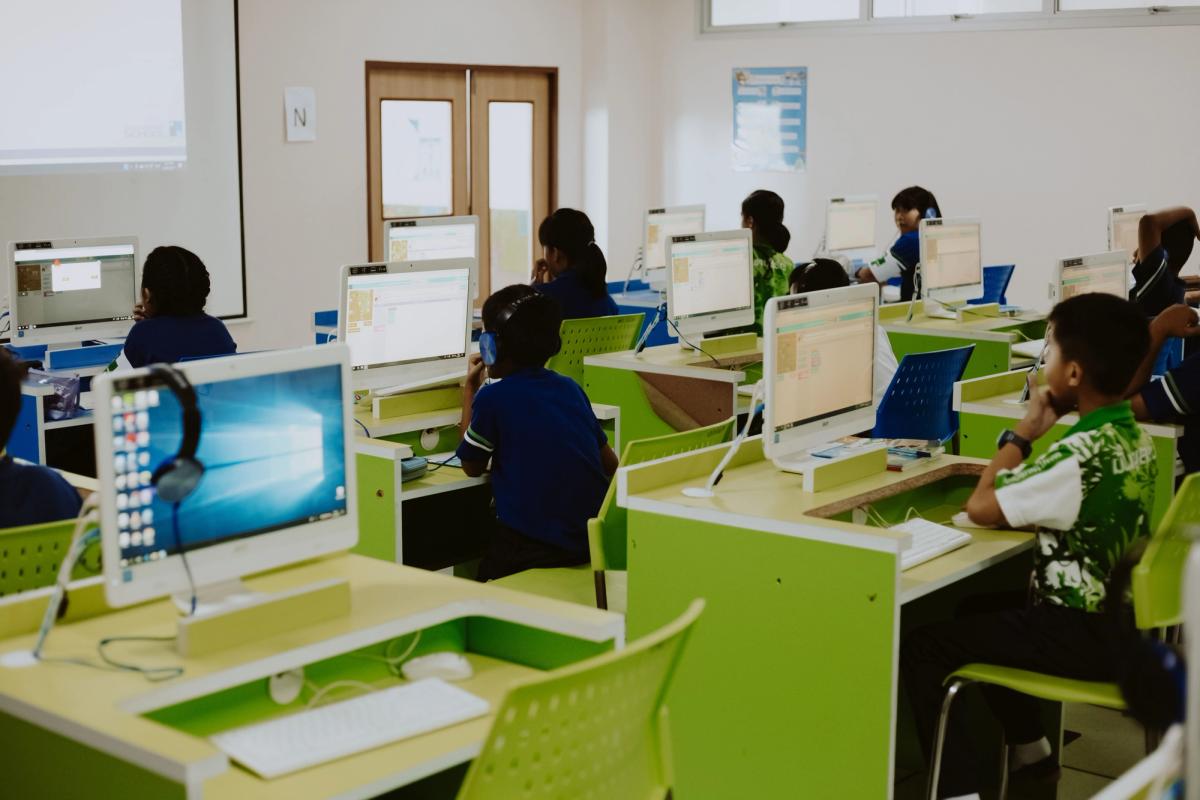
In kindergarten through second grade, students would “recognize that artificial intelligence tools are created by people to help complete tasks, and that artificial intelligence is not human and can sometimes make mistakes,” under the August version. Implementing those early standards would not necessarily mean an increase in student screen time during the school day – The curriculum can be taught with or without computers, through unplugged activities, play, and stories.
In grades 3-5, students would learn the difference between programs that follow set rules and systems that use patterns in data, and that AI outputs “should be reviewed by people.”
Middle schoolers would evaluate what AI produces “for accuracy, bias, limitations, and misinformation” and study its effects on privacy, fairness, and opportunity in school and the workplace.
High school students would weigh AI as a collaborative tool, credit AI-generated content they use in their own programs, and “evaluate the impact of reliance on artificial intelligence tools for thinking, learning, and productivity.”
The revision also splits the elementary standards into K-2 and 3-5 bands and changes the core concept called “Networking and The Internet” to “Systems and Security.”
Who It Reaches
Computer science is already required in Tennessee public schools. Elementary schools build it into everyday instruction, middle schoolers take a course for at least one grading period, and students who started high school in 2024-25 or later must earn a computer science credit to graduate, according to the Department of Education.
The department developed the revision with input from a statewide team of computer science educators. Colleges, industry partners, non-profits, and an AI Working Group led by the department and the State Board also reviewed it. The department plans to revisit the standards every three years.
The August version says AI lessons should be age-appropriate and follow local policies. A 2024 state law requires every school board and public charter school to adopt a policy on how students and staff may use AI for instruction and assignments.
Views on AI in Classrooms
An August Beacon Poll found Tennessee voters split on AI in schools. Of 1,200 registered voters, 42 percent said the risks are too great to use AI in K-12 classrooms, 40 percent would allow it with clear limits and teacher oversight, and 11 percent said it should be broadly used.
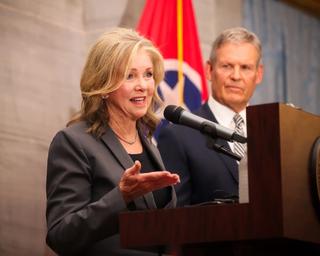
Governor-Elect Marsha Blackburn told the Tennessee Firefly’s On the Fly podcast in August that she expects AI to become part of the curriculum, taught at levels suited to each age.
“Just as we’ve decided what you do at certain stages with math or with science or with history, and it’s a part of that curriculum, you’re going to see AI as that type of curriculum,” said Blackburn. “This is age-appropriate for this group and for that group.”
Jerri Green, the Democratic nominee for governor this year, told the Tennessee Firefly in written answers that she had “major reservations” about AI use by elementary and middle school students.
“Elementary and middle school are definitely too young to be relying on AI for any core learning,” wrote Green.
Education advocacy organization Tennesseans for Student Success (TSS) has called for student-centered guardrails on AI tools in classrooms. Its policy primer sets a three-part test for those tools. They should meet all state standards for instructional materials, be narrowly applied to a specific need while preserving students’ role in learning, and be judged mainly by the positive outcomes they generate for students. 
The Tennessee Firefly is a project of and supported by Tennesseans for Student Success.
Members take the final vote Friday at their meeting at the Alvin C. York Agricultural Institute in Jamestown, which begins at 9 a.m.