


Last July, the Tennessee Comptroller’s Office presented lawmakers with a report detailing the significant role federal dollars play in education.
Students across the state receive meals at school through more than $463 million in child nutrition dollars, while Title I funding provides $346 million to support economically disadvantaged students, and those with disabilities benefit from $301 million from the Individuals with Disabilities Education Act (IDEA), according to the Comptroller.
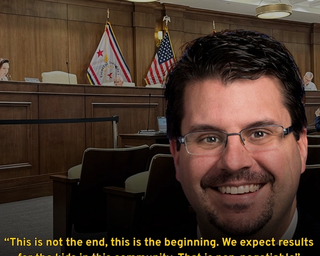
A new report from the Millennial Debt Foundation’s In the Black initiative argues that federal education funding “rests on shaky long-term economic foundations” due to rising spending on Medicare and Social Security and the growth of federal interest expenses. In the Black Policy Director William Glass cites projections that show federal net interest costs rising from 3.1 percent of GDP in 2024 to 6.3 percent by 2054.
“These two trends jointly consume an increasing share of federal revenues, leaving less fiscal room for discretionary programs such as Title I, IDEA, and school nutrition funding,” wrote Glass in the report. “As interest and mandatory expenses take up more of the envelope, education becomes an easy target for retrenchment, or even block grant restructuring.”
In the Black argues that school districts should adopt a reversal of the categorization Tennessee required them to use for federal pandemic funding. According to the report, the Tennessee Department of Education required every district to align pandemic Elementary and Secondary School Emergency Relief Fund (ESSER) funding into four clear categories:
- Academics (including tutoring, summer learning, and early literacy).
- Student Readiness (including mental health services, tech access, and nutrition).
- Educators (including professional development and retention stipends).
- Foundations (including HVAC, technology, and infrastructure).
Glass argues that districts should triage potential federal funding reductions in these same categories every six months to plan ahead for potential changes. In the Black’s report makes the case that this preparation would help state leaders approach funding reductions strategically and prioritize dollars where they’re most urgent.
“Our elected officials cannot assume the same levels of federal funding for education will continue,” said Glass. “We have already experienced the turmoil when funds are withheld or even paused temporarily. It is incumbent upon states to develop strategic plans for addressing the shortfall without sacrificing the institutional readiness of our education system.”
Hamilton County Mayor Weston Wamp founded the Millennial Debt Foundation in 2019 to promote fiscal stewardship in local and state policy.