
Tennessee House District 59 includes the Belle Meade, Forest Hills, and Oak Hill neighborhoods of southwest Davidson County. Representative Caleb Hemmer, D-Nashville, has held the seat since 2022 but opted not to run for re-election this year.
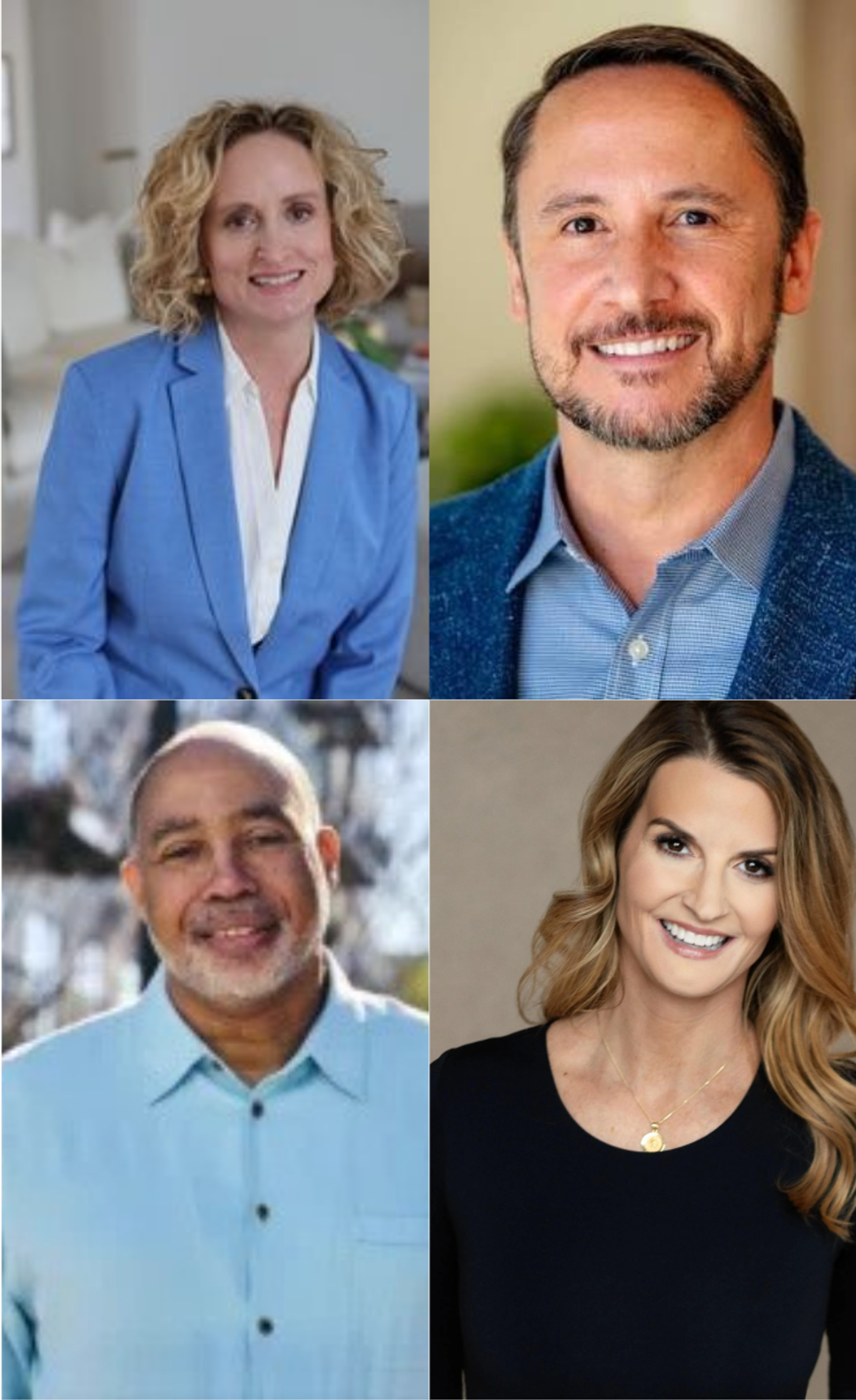
Four Democrats qualified to run for the seat, including Angie Lawless, Mark Proctor, Beth West, and Rick Ewing. Lawless is an attorney and entrepreneur; Proctor served as a Tennessee Highway Patrolman for more than 25 years; West is a nonprofit executive; and Proctor, who has a son diagnosed with Tuberous Sclerosis, Co-founded and led the Tuberous Sclerosis Alliance of Middle Tennessee for 20 years.
As part of an ongoing series, the Tennessee Firefly reached out to each with questions about key education issues the General Assembly will grapple with next year.
Reducing Barriers to Open Enrollment
This year, lawmakers came close to passing legislation that would make it easier for families to enroll their children in school districts outside of the one they’re zoned for, sometimes called open enrollment.
The Firefly asked each candidate about their stance on this issue. While Ewing did not answer this question, the other three candidates varied widely in their responses.
West made it clear she was opposed.
“No,” West said. “While I am glad open enrollment keeps funding within the public school system, I have concerns about the impact it will have on low-income and rural districts. Given the fact that Tennessee’s education funding formula follows students to their district, open enrollment will likely take funds out of already under-resourced districts, significantly lowering outcomes for the students that remain in those districts. Open enrollment would likely benefit wealthier families who can afford transportation to farther school districts and leave students who stay in the existing district worse off in the future.”
Lawless indicated that she remains on the fence about open enrollment and provided elaboration on why.
“There are sometimes situations where it makes more sense for a family to enroll their son or daughter in a school that offers different services… or maybe enroll them in a school that is close to a parent’s place of employment, for example,” Lawless said. “Done right, I think open enrollment can strengthen public schools by keeping students in public education. I do believe that we need a system that is transparent, capacity-based, and fair, however. I want to make sure we are helping, not hurting public education by considering open enrollment.”
Proctor was also supportive of reducing barriers to open enrollment, albeit with some guardrails in place, including considerations of transportation access, capacity standards, and increased transparency in the process itself.
“I support giving families greater flexibility within the public school system, provided it is implemented fairly and responsibly,” Proctor said. “When space is available, families should have opportunities to enroll their children in public schools that best meet their educational needs. At the same time, open enrollment should not create unintended consequences for students or school districts.”
Preserving Accountability for Students and Teachers
Recent years have seen proposals in the General Assembly to weaken both the state assessment and teacher evaluation systems, despite research showing both have contributed to improved student performance.
Each candidate was asked for their thoughts on teacher evaluations, and the number of state assessments students should take each year. All four candidates said they support accountability for teachers and students, but they also expressed support for reducing the required evaluations for experienced teachers and for using standardized testing more thoughtfully.
“I believe that both systems need reforms to best serve the interests of our students and teachers,” West said. “I support the use of standardized tests as useful tools to see where we can improve our education approach going forward. However, I believe that TCAP scores should be primarily used as a diagnostic tool for teachers and districts, not a significant portion of a student's overall grade or completely indicative of a teacher’s ability. Slightly decreasing our testing requirements to more closely follow national standards would give students and teachers more time for one-on-one lessons in the classroom without sacrificing our rigorous standards.”
“I believe in accountability, but our current systems too often measure compliance instead of supporting great teaching, and they take time away from the thing that actually matters: instruction,” Lawless said. “On teacher evaluations, I support reducing the frequency of formal evaluations for experienced teachers who consistently meet or exceed expectations. Evaluating a proven, high-performing veteran teacher with the same intensity as a first-year teacher doesn't improve outcomes. Instead, it consumes hours of administrators' and teachers' time that would be better spent in classrooms. I especially feel this way for teachers who are performing above average… As for student testing, I believe we should reduce testing where it makes sense while still maintaining accountability. I support the annual state assessments in English language arts and math, which are required under federal law and provide parents and educators with valuable information about student progress. However, we should evaluate whether subjects like science and social studies need to be tested as frequently.”
“As a retired law enforcement leader, I believe accountability is important, but our accountability systems should support better outcomes, not become the goal themselves,” Proctor said. “I support reviewing the current evaluation system to ensure it provides useful feedback without creating unnecessary administrative burdens or placing too much emphasis on standardized test results. Great teachers deserve an evaluation process that recognizes the complexity of their work and helps them succeed in the classroom. For students, I believe Tennessee should take a more thoughtful approach to its reliance on standardized testing as the primary metric of success, as well as the test time in comparison to lost learning time. Assessments have an important role in measuring student progress and identifying learning gaps, but they should not consume weeks of instructional time.”
“I come at this as the son of a 50-year (MNPS) educator and the parent of a child with disabilities, so I care about two things at once: keeping good teachers, and knowing whether every child is actually being served,” Ewing said. “On testing, I've heard strong, capable arguments on both sides. There's a strong case for tracking progress more often… But if you ask the teachers, they're pretty clear that more testing isn't the answer, and I think we have to trust that the people doing the job know what they're talking about… Teacher evaluations are a similar but separate conversation. More than 80 percent of Tennessee teachers support the evaluation system we have. They believe in being observed, coached, and held to a standard. What they've asked for is narrower and, to me, pretty reasonable.”
Expanding Public Charter Schools
Students in House District 59 have the option of attending public charter schools across Davidson County. Charter schools are free public schools run by a non-profit under a “charter” with a school district or the state.
Firefly staff asked each candidate whether they’d support expanding this type of school to more communities.
Ewing did not answer this question, and Lawless provided a short answer saying, “I believe we must fully fund public education. That should be our first priority before we look at expanding public charter schools.”
West said that she supports the charters currently operating in Tennessee but does not support opening any new ones.
“The charter school topic can be contentious,” West said. “Some argue that charter schools provide children with an alternative to public school if parents feel that the public school system isn’t adequately serving their child’s needs, but the charter school system has major limitations when it comes to serving children with special educational requirements. Additionally, I am concerned about charter schools exacerbating the already severe underfunding of our public schools, as well as the pattern of religious education requirements in charter schools. Overall, I believe that we should allow existing charter schools to continue to operate, but on the whole, fully focus on solutions for our public education needs in Tennessee, such as raising per-pupil spending and fighting the expansion of the current voucher program.”
Proctor said some charters can be valuable for students, but he does not see expansion as a priority.
“I believe every Tennessee student deserves access to an excellent public education,” Proctor said. “While some public charter schools have served students well, particularly those that offer specialized programs in areas such as STEM, the arts, or career and technical education, expanding charter schools should not be the state's priority. Our priority should be strengthening the public schools that educate the overwhelming majority of Tennessee children. Any school supported by taxpayer dollars should be held to the same standards of accountability, transparency, and academic performance. Charter schools should complement, not come at the expense of, our public school system by diverting critical funding or weakening the neighborhood schools that serve Tennessee families every day.”
Expanding the Education Freedom Scholarship
Democrats have nearly universally opposed programs like the Education Freedom Scholarship and Education Savings Account that allow families to use taxpayer dollars for private school expenses, sometimes called “vouchers.” We asked each candidate whether they supported expanding these programs, and all three who answered stated they were opposed. Ewing, again, did not answer this question, and Lawless gave another short answer: “No. We need to keep public funds in public schools.”
“No,” West said. “I am strongly opposed to the school voucher program. Last year, a state audit found that approximately two-thirds of Education Freedom Scholarship recipients had already been enrolled in private school. This means that the school voucher program is effectively subsidizing the wealthy and cutting critical funding from our state’s already underfunded public schools. Fully funding the public education system is paramount to the success of Nashville, Davidson County, and District 59. While I respect a family’s personal decision to send their children to private or independent schools, I believe that fully funding our public schools helps the next generation of Tennesseans from all backgrounds and zip codes grow into future leaders and impactful community members.”
“I understand why parents want every available opportunity to help their children succeed, and I don't fault any family for taking advantage of a program that state law makes available,” Proctor said. “My concern is not with parents; it's with ensuring that Tennessee's education policies are fair, fiscally responsible, and put students first. I do not support expanding a universal voucher program that diverts taxpayer dollars away from our public schools. If Tennessee is going to provide educational scholarships or vouchers, they should be targeted to families with the greatest financial need, not subsidize private education for families who already have the means to afford it.”
How Would You Improve Education Outcomes?
Firefly staff also asked each candidate how they would improve student outcomes in Tennessee. Three of them answered by again referencing their stances on school vouchers, while Ewing discussed school funding.
“I oppose the current school voucher program because I feel that the program effectively subsidizes school for the wealthy while cutting critical funding from our public schools,” West said. “Regardless of a family’s personal decision to send their children to private schools, I believe fully funding our public schools helps the next generation of Tennesseans grow into impactful community members and leaders.”
“We must fully fund public education; that means keeping public dollars in public schools, not subsidizing the costs of private tuition,” Lawless said. “I am opposed to vouchers, and I believe they are one of the biggest threats to public education. We also need to increase teacher pay, hire more teacher assistants to reduce class sizes and lighten teachers' workloads, and ensure every child has the support they need to succeed.”
“Every Tennessee child deserves access to a strong public education, regardless of their ZIP code,” Proctor said. “That starts with fully funding our public schools, supporting and retaining great teachers, and ensuring students have safe, well-equipped learning environments where they can succeed. We should focus on proven investments that improve student outcomes, early literacy, career and technical education, mental health resources, smaller class sizes where possible, and modern school facilities rather than diverting taxpayer dollars away from public schools through voucher programs.”
“Tennessee ranks dead last in per-pupil spending, and that's the root of most of what holds our students back,” Ewing said. “TISA changed the funding formula, and I think that's a more efficient way to work. But they didn't fix the baseline at the same time. A better formula is a great start. If it still funds at the same inadequate level, though, we're facing the same problems with a new formula wrapped around them. So that's where I'd start.”
The winner of the House District 59 Democratic primary will face Republican Bill Hancock in November.