

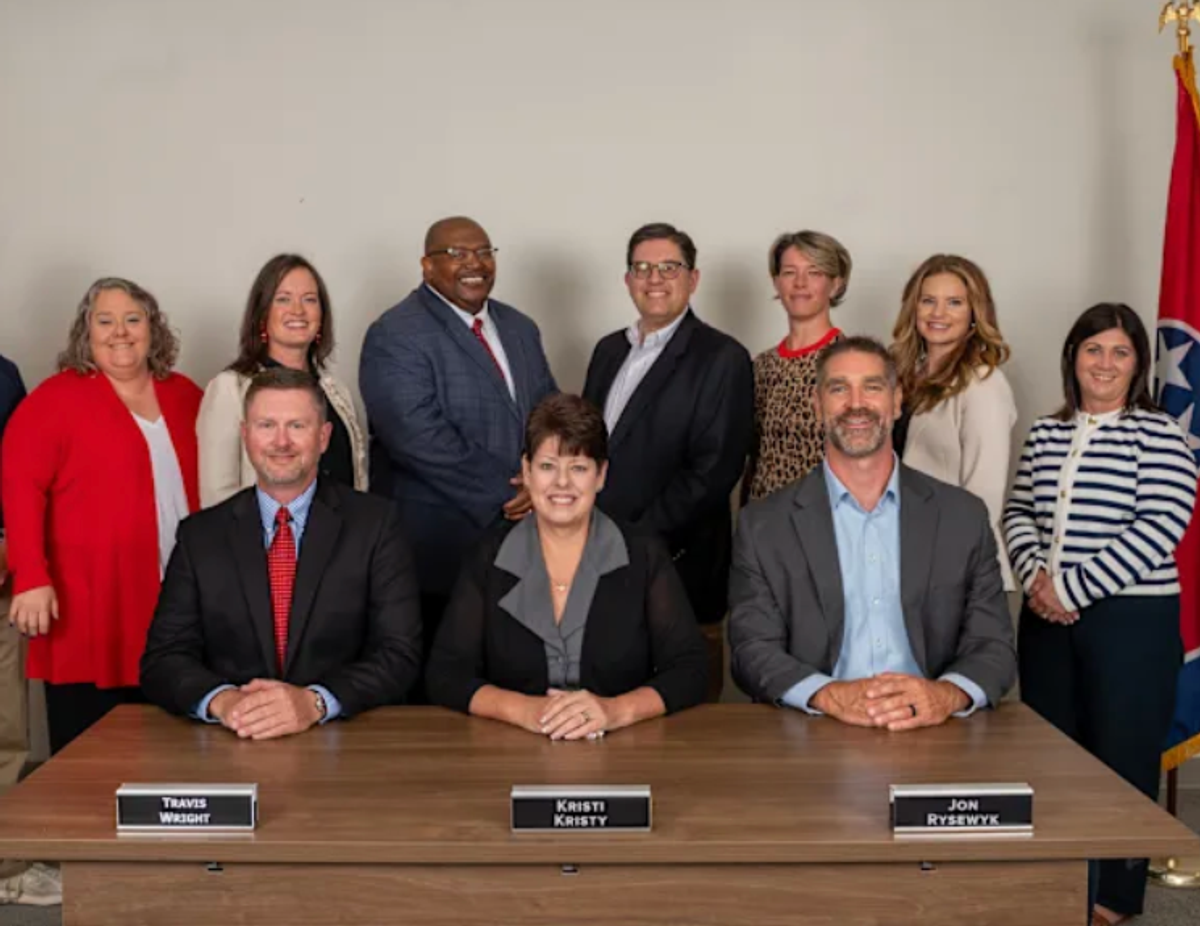
The Knox County School Board is moving forward with a measure urging the reform of a state law.
The board voted 5-4 in its meeting Thursday night to proceed with a resolution to ask state lawmakers to refine the state’s Age-Appropriate Materials Act to provide pathways for local school boards to do three things:
- Restore the requirement that all materials be evaluated as a complete work and weigh any identified passage against the full text’s historical and literary merit.
- Extend the Materials Review Period, during which a local school body must evaluate whether a challenged library material complies with the Act, from 60 to 90 days.
- Replace the current uniform K-12 book-removal standard with a grade-band framework that allows districts to restrict library materials at each grade level.
Background
Knox County Schools confirmed on May 14 that it was pulling Roots from its schools, even though a review committee had already reviewed part of the book and did not recommend banning it. Then, less than two weeks later, Superintendent Dr. Jon Rysewyk decided to put the book back on the shelves after speaking with legal officials.
The debacle was tied to the 2024 Age-Appropriate Materials Act, which requires school districts to post lists of all the books in their libraries on each school’s website. It also compels them to have a process to check whether books are appropriate for students’ ages and to give parents a chance to weigh in on what’s included.
During a work session last Monday, the board met for the first time since banning and reinstating Roots and tentatively decided on a resolution proposed by board member Anne Templeton, which was tweaked and finalized in Thursday’s official meeting.
Board Discussion
Knox County Schools Superintendent Dr. Jon Rysewyk also weighed in on the controversy, saying there was a public misconception on how Roots’ reinstation occurred, that he did not “overrule” the book-banning committee, but instead “erred on the side of access” due to possible legal ramifications.
“I didn't disagree with what the committee did,” Rysewyk said. “I think they did the right work in that, but I also felt like it was incumbent on me to seek other opinions about that, because we're not attorneys.”
Board member Steve Triplett, who later voted against the resolution, made it clear that he wasn’t directly opposed to it and agreed with Roots being reinstated to school libraries, but he felt the Age-Appropriate Materials Act was beneficial, and he did not want to send a message to the General Assembly that he wanted it “watered down.”
“I think that in the last two years we've looked at we've looked at 300-some-odd books, but 124 have been removed, and only one of those we believe (were) an overreach,” Triplett said. “I think that's pretty good numbers, and we got it right.”
Board member Patricia Fontenot-Ridley, who voted for the resolution, disagreed and argued that, because libraries are sometimes the only place where children can access books in a safe environment, it should be up to librarians to make decisions on what materials can or cannot be there and for parents to decide what they are comfortable with their children reading.
“One group of people should not make the decision for every single parent, because there are a lot of parents in the world, and I realized this at a conference one time,” Fontenot-Ridley said. “There were 3,000 educators in one room, and I couldn't help but think there's not a single thing that every single, or even two, of these people in this room (agrees) upon completely. Everybody's got their own idea of what is proper or what it should be accessible, and me, as the proud parent of a 34-year-old who went through Knox County schools, I want to make decisions on what my child can read, and if the only way that he could get it is the library, then it should be there for him to read.”
The legislative process for revising the Age-Appropriate Materials Act will begin in the fall, as school boards can submit proposals for resolutions from June through September.