
A recent report from the education advocacy organization 50CAN indicates that overall school satisfaction in Tennessee is similar to the national average, despite some differences across income levels. 
According to the report, titled “The State of Educational Opportunity in America,” 46 percent of parents and guardians in Tennessee are “very satisfied” with their child’s school, compared to 45 percent nationally. The report, which was conducted by Edge Research from July 8 to August 22, included insights from 20,090 U.S. parents and guardians of school-aged children. 
Similar to national trends, the report noted that school satisfaction in Tennessee was higher among mid-to-high income families. The report said that among mid-high income families in Tennessee, 48 percent said they were very satisfied with their child’s school. That number was 43 percent among low-income families.
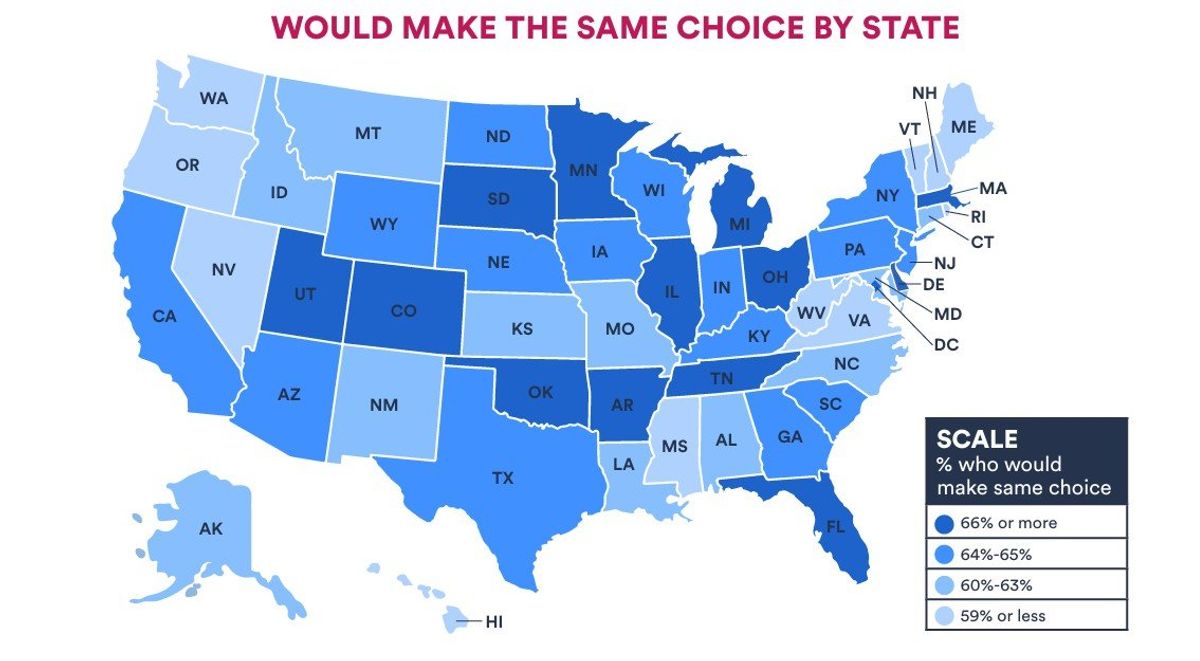
When it comes to school choice, about 68 percent of Tennessee families surveyed said they would send their children to the same school if given a choice, compared to 64 percent nationally. That number was 70 percent among mid-high income families and 65 percent among low-income families in Tennessee. Sixty-four percent of Tennessee families feel that they have a choice in what school their child attends, similar to the national average of 65 percent. That number was 66 percent and 62 percent among mid-high and low-income families in Tennessee respectively.
The report said that nationally, figures such as these tend to vary significantly, depending on the type of school.
“The differences are striking. For example, parents who send their kids to parochial/religious school (70 percent very satisfied), private school (65 percent) or homeschool (65 percent) are significantly more satisfied than those whose child attends a traditional public school (just 39 percent),” the report read, adding that the number was about 50 percent for parents of children in public charter schools nationally.
In terms of career readiness, 38 percent of Tennessee parents said they are “extremely confident” their child will be well-equipped to succeed in the workforce, compared to 34 percent across the U.S. Among mid-high and low-income families, that figure was 41 percent and 35 percent respectively. What’s more, about 39 percent of Tennessee parents believe their child will be prepared for college after high school, compared to 32 percent across the U.S.
“With many of the activities and experiences explored in this study, lack of opportunity is not just a phenomenon among low-income families. It is a middle-class challenge as well. In many cases, the challenges and barriers faced by middle-class families are much closer to that of low-income families than high-income families,” the report noted.
The survey also investigated how satisfied parents are with the support their school provides for their child’s emotional and mental health needs. It said that 40 percent of Tennessee families are very satisfied with how their school supports their child’s mental health needs, compared to 37 percent nationally.
Nationally, in K-3rd grade, over 40 percent of parents said they feel good about the emotional and mental health supports provided at schools. But starting in fourth grade, satisfaction declines seven points, to 35 percent.
“The transition from middle school to high school seems to be particularly challenging, with just 29 percent of the parents of 9th graders saying they are very satisfied with the schools’ mental health support,” the report noted.
To take a look at the full report and other findings, visit50CAN.org.